Immigration with Esperanza

I have been using the TPRS Publishing novel, Esperaza, with my 8th grade class and over halfway through the book, it has been a success.

My students have particularly enjoyed listening to the audio book as they read. I find it helps with the comprehension. And it has also inspired some students to go around the school chanting “Huelga… Justicia… Huelga… Justicia…”.

Speaking of justicia… Continue reading

Posted in Lesson Plans, Music, Storytelling | Tagged , , , , | Leave a comment

React in Spanish

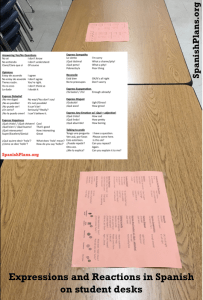
Something I wish I would have done at the beginning of the year: Put a sheet of common Spanish expression on the students’ desks. Having them on each students desk or table, Spanish Expressions on Desksas opposed to a poster, makes it very handy to students to reference. I include common questions that students ask, as well as a list of reactions. The reactions, such as “¿En serio?” and “Guácala” are a great way to students to express themselves to what is happening in class. It keeps students in the target language and slowly they will internalize these words and no longer need a reference sheet to be able to react appropriately in the target language. If they something something in Spanish, I can just discretely point to the phrase on the sheet in front of them.

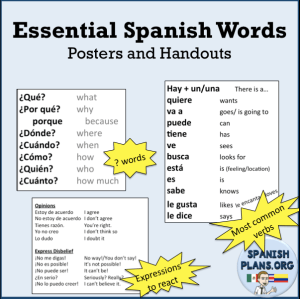
They are a great way for students to give their opinion on what is happening in a class story or a class novel. You can get this expression sheet plus a poster sheet of the most important verbs for storytelling in our new Essential Spanish Words Posters and Handouts.

Essential Spanish Words

It also includes a Question Word poster plus Common Verbs poster.
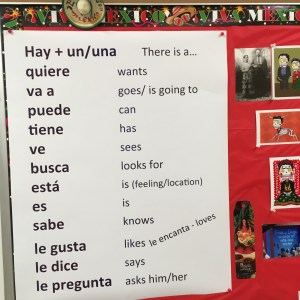
Top Spanish Verbs PosterI used our school’s poster maker to print the sheet to poster size to hang up in my classroom. I can easily reference when these words come up in a story


You can also print these Spanish Rejoinder Labels to post on a bulletin board. Spanish Rejoinders Bulletin Board

Posted in Discussion/Methodology | Tagged , , , , , | 1 Comment

Writing a Novel Chapter Summary

Our students just finished the first three chapters of the novel Esperanza by Carol Gaab, of TPRS Publishing. So far, so good. I’ve been using the Teacher’s Guide, which is very helpful. And the audio book is a great support for comprehension.

At the end of chapter 3 and the end of the week, it was a a good time to stop and digest what we’ve read so far. I had my first two classes write a summary of each of the first three chapters. I then realized that perhaps some students needed some support in writing a summary.How to summarize a chapter in Spanish

So we talked about “Los Eventos Importantes” from each chapter. I gave students a statement from each chapter and we decided “Es importante” o “No es (muy) importante”. You could prepare a list ahead of time and have students circle the “important events”, star the “super-important” events”, checkmark the “maybe important events” and cross out the “not important events”. This gives them a framework going forward of what type of information to include in a summary.

If you would like a blank template for students to write their own summaries, or for your to type in the events of any story or novel you are reading as a class, you can download our free template, click on the picture below:
Chapter Summary

Posted in Storytelling | Tagged , , , , | Leave a comment

March Music Champion

And the winner is….

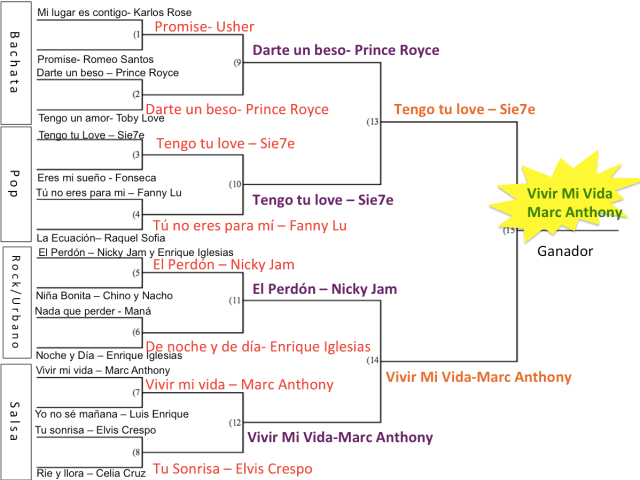
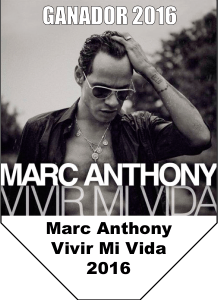
March Music Madness BracketMarch Music Winner Banner

I had the students fill out a survey as part of the voting process and here’s a few key notes: Continue reading

Posted in Music, Projects | Tagged , , , | 7 Comments

Stocking the Spanish Classroom: What supplies to order

Whether you are starting at a new job, opening a new school, opening a Spanish department, or just getting ready for next year, lots of teachers are looking for suggestions of what are must haves for teachers. If have a budget to spend for your department, here are some suggestions:

Curriculum:

  1. Subscription to SenorWooly.com
  2. Novels from FluencyMatters.com
  3. Lesson Plans from Somos Curriculum or subscription to Garbanzo
  4. Mini-White Boards / Personal Dry Erase Boards  or SmartPals Sleeves
  5. Props: Plastic foods, puppets, Mr. Potato Head for body parts unit, Guess Who Games for practicing descriptions  (Some of these you can probably find at garage sales or second-hand retail shops)
  6. TeachersPayTeachers.com: a lot of awesome ready to use lessons tested by actual teachers. Did you know they accept purchase orders?

Technology:
1. Computer Projector or Document CameraSpanish class supply order
2. Digital Recorders
3. Earbuds for students
4. Music Player (Stereo) or Speakers for Computer to play audio activities
5. Teacher Account for Quizlet.com Continue reading

Posted in Resources | Tagged , , , , | 1 Comment

MarzodeMusica 2016

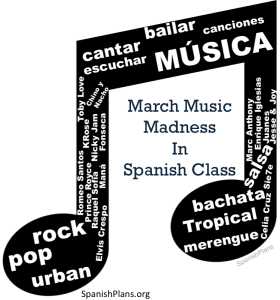
March Music Madness 2016 is just around the corner. We are ready for another fun competition where songs go head-to-head to decide a winner.MarchMusicMadness

This years bracket features 16 songs and we’ve broken them down to 4 categories: Bachata, Pop, Rock/Urbano, and Salsa.  We avoided songs from our favorite artists Juanes and Jesse & Joy, which we listen to quite frequently. The tricky part was also to find new, hip songs with appropriate lyrics. We avoided any songs with overly sexual lyrics.

Here is our bracket: Continue reading

Posted in Music | Tagged , , , , | 12 Comments

La Criatura Story Continued

I used Martina Bex’s La Criatura story with my level 1 class a few weeks ago. The next day we continued that story to explain what happened to the “criatura”/science teacher. We were able to recycle so many vocabulary words that we had already been using.

With permission from Martina, we are sharing our follow up story.
La Criatura Parte 2 Spanish story

To use this in your classroom:
Continue reading

Posted in Storytelling | Tagged , , | Leave a comment

Monstruo del Armario MovieTalk

Our theme of creepy movies used during MovieTalks continued with the 2:50 video from PMonstruo del Armarioablo Conde titled “El Monstruo del Armario”. (We’ve also used Alma, and a video I call Toc-Toc) This movie worked well after students had created their own MonstruosdelClosetmonsters, labeling the body parts. I have an unused closet in my room, so we have our own closet full of monsters in our classroom, which made this movie a nice tie-in. For this video, we were able to recycle structures such as “ve”, “quiere dormir”,  body parts, and focus on new structures such as “tiene miedo”, “cree” and “está asustado”. For more resources related to body parts, health, and feelings, check out the section on our resource page with links to all our blog posts sorted by theme.


For a ready to use lesson using this video, check out our 3 day lesson, which includes a sample story, questions, and screenshots for students to re-tell the story.

If you are looking for more videos to use for MovieTalks, check out the MovieTalk Databases listed on our Collaboration post.


Posted in Storytelling | Tagged , , , | 1 Comment

Un Besito Mas

Amor is the most used word in Spanish pop music, followed by vida, día, noche, and corazón.

We recently took the lyrics from Jesse and Joy’s new album “Un Besito Más” and found the top 50 words that appeared the most times to create this word cloud: Continue reading

Posted in Music | Tagged , , , , | Leave a comment

En el restaurante comic strips

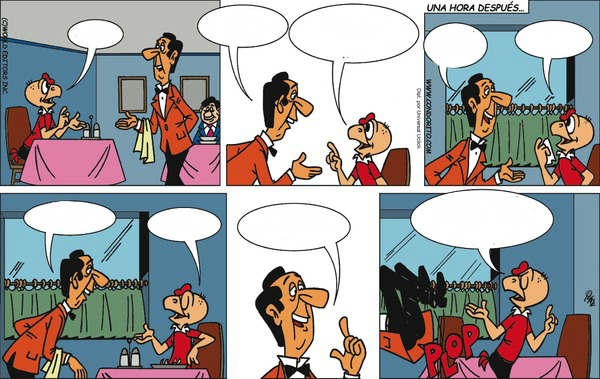
We’ve taken the language out of a few authentic comic strips and used them as a writing assessment for students for students to write the dialogue of ordering at a restaurant.

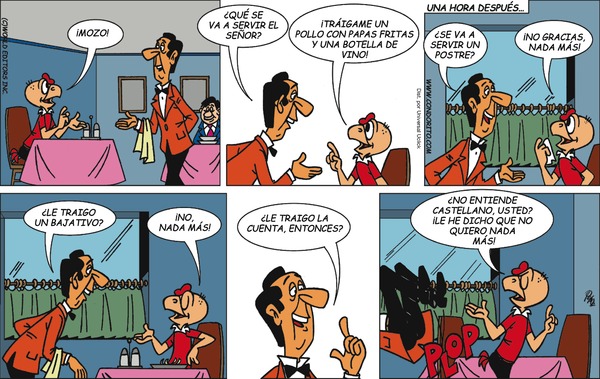
Take this Condorito comic:

restaurant
and then have students write their own dialogue:restaurant blank
or check out this edited version with more space to write.

You can also use the original comic as an interpretive reading activity.

Or take this comic from Baldo: Continue reading

Posted in Authentic Resource, Resources | Tagged , , , , , | 2 Comments