4 million


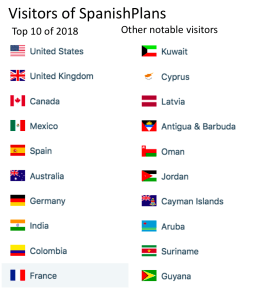
During last week’s first days of school, our blog passed the 4 million total views mark. Wow, what an honor to know that thousands of Spanish teachers around the world have visited our blog. We are truly amazed to see the wide range of countries that our visitors originate from. 

We started this blog 8 years ago in November of 2010. We are thankful to those first 82 views we received that month. In one year’s time our reach had grown to 11 thousand in the month of November.  This November we expect over 40 thousands page views.

It has been a pleasure to share what I am doing in my classroom, and even those blogs posts that don’t get many hits still allow me to reflect on my own practices, something that I am thankful for.  So let’s talk a look back and celebrate, and give our guests a chance to win some prizes.

Some highlights:

Some of our most viewed pages:

  • We originally posted teacher memes, that we have since moved to their own website, Spanish Captain is Si-sick, chiste from SpanishPlans.orgTeacherMemes.com, but our Spanish Chistes are a big hit as well, featuring 20 cheesy Spanglish jokes.
  • Originally posted in 2011, this post talks about 6 different Spanish Projects, including our popular Facebook Spanish Profile Project.
  • In 2013, we started posting a collection of resources for thematic units, and LA ROPA unit and LA COMIDA unit are the two most visited.

Some of our most participated posts:

  • Every year, our post on Why We Don’t Give Spanish Names gets shared on social media and people sure have their opinions. It’s why it’s our most commented post.
  • One of my favorite things all year is the March Music competition, where hundreds of teachers joined us in our 2018 March Music Madness challenge. While thousands of teachers across the US now do their own tournament, it was THIS POST on this blog in 2014 that set the waves in motion. This may be our single biggest impact in Spanish classrooms across the US.
  • Other posts that sparked discussions with comments include our take on Cinco de Mayo (2011) as well as Attributes of Effective WL teachers (2014).

Ok, so let’s get to the fun part. What does this celebration mean for you? Well, to celebrate we are giving away the following prizes: Continue reading

Posted in Uncategorized | Tagged , , | Leave a comment

Papel Picado Bulletin Board

Most teachers will use paper from the butcher paper roll to use as a background for their Spanish Bulletin Board alternativesto their room, we have some classy alternatives in mind:bulletin boards. I don’t blame them: it’s available and it’s easy. Most schools provide this paper to teaches, so it’s an affordable option. For those who are looking to add a little flair Continue reading

Posted in Bulletin Boards | Tagged , , , , , | 2 Comments

Vocabulary in Context

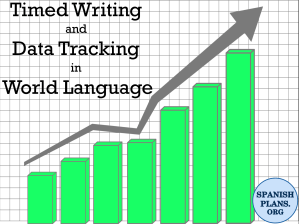
As we looked at the last data collection of student vocabulary, we were a bit surprised that some words had lower correct responses than we expected. So we decided to do a little educational research and what we discovered really didn’t surprise us: Continue reading
Posted in Vocabulary | Tagged , , , , , | 4 Comments

SLO and Vocabulary

SLO 2: Vocabulary Growth

See our preview post about using Timed Writing to track student growth as part of our our teacher evaluation. (Referred to as SLO or SGO in some states).

Our second SLO (Student Learning Objective) was to show student growth in vocabulary. We put together a list of 180 words, mostly from the Top 300 Common Words in Spanish. The words were not a list of textbook vocabulary words, but rather common words that are part of every day language. Some of these words were non-targeted, meaning they were not explicitly taught, and others were some of the targeted vocabulary from class stories. Continue reading

Posted in Uncategorized, Vocabulary | Tagged , , , , , , | 5 Comments

World Language SLO with Timed Writing

Many states now require teachers to show evidence of student growth as part of their teacher evaluation. One such example is the Student Learning Objective (SLO). This collection of data can be laboring, but it can also be useful as a tool of communication to students and parents about their growth in the language. This past year I used Timed Writing as a data collection piece as part of my SLO for

Timed Writing World Language SLO

Spanish.

The SLO would be to increase student fluency in the target language. The methods to achieve this Continue reading

Posted in Uncategorized | Tagged , , , , , | 8 Comments

How to print a glossary for a book


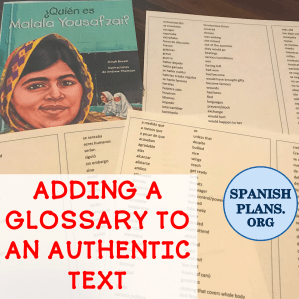
In the past, we showed you how to take an entire text and put ALL of the words into a glossary. This is especiallu useful when you’ve written a class story and want to print a small booklet for your FVR.making an authentic text more accessible

But what about when there is an authentic text that you want to include in your FVR and it doesn’t have a glossary? Well, we have an easy to follow tutorial to help you with that. Continue reading

Posted in FVR, Uncategorized | Tagged , , , , , , , , , | 2 Comments

Pre Amnesia Story

During Wooly Week 2017 Sr. Wooly released one of my now-favorite videos, Amnesia. In the video, a man mysteriously wakes up in the middle of the street and can’t remember who he is. The song is a great set of input for “No sé que hacer” and “no recuerdo (nada)” as well as looking at the differences between saber and conocer. Let me tell you how I used this song in my classroom and share with you some activities.

1. Before Amnesia, I actually used the Senor Wooly song “No voy a levantarme” first. We acted out a very simple version of this story in class where a student is sleeping and his Students acting out story of No Voy a Levantarmemom tried to wake him up. In groups of 3, one student played the sleeping child, one the mother, and the other person was the narrator (who was also responsable for making sure the actors performed their dialogue correctly). I had two different scripts ready for students to act out. The main focus was on the daily routine phrases “se despierta”, “se levanta” y “se acuesta”.   Continue reading

Posted in Lesson Plans, Resources, Storytelling, TPRS | Tagged , , , , , | Leave a comment

Summer PD reading

Many of you are either already out for summer or are approaching summer. But we all know that teachers are busy during the summer with summer school, planning for next year, taking classes or attending training among other things. Today we’d like to highlight some Professional Development reading that would be beneficial to Language Teachers.

1. Comprehensible and Compelling: The Causes and Effects of Free Voluntary Reading
I don’t know about you, but when there is a Krashen book available to read, I’m all over it. This book, published at the end of 2017, “provides compelling research-based arguments for reading aloud, free voluntary reading, and reading to one’s strengths” and “identifies and explains the three stages in the development of the highest level of literacy: hearing stories, self-selected recreational reading, and specialized reading in an area of deep personal interest.”
FVR has been a game changer for my classroom, so if you have questions about impleting it in your classroom this book is a must rea

Other Krashen titles:

2. TPRS with Chinese Characteristics: Making Students Fluent and Literate through Comprehensible Input

Don’t worry if you don’t teach Chinese. This book is applicable to all languages. So many teachers have recommended this book by Terry Waltz and it’s no suprise. “It is loaded with down-to-earth practical advice for any language teacher who wants her/his students to actually develop true proficiency.”

3. Fluency Through TPR Storytelling

There is a reason some people refer to this book as the “Green Bible”, as the father of TPRS, Blaine Ray, guides the reader on implementing TPRS in his/her classroom. If you are new to TPRS, this would be a good place to start.


If you are a member of ACTFL, you can also purchase their publications. What are your summer reading titles?

Posted in Uncategorized | Tagged | 1 Comment

End of Year Feedback

Any good teacher is always looking ways to be a better teacher. So at the end of the school year as I reflect upon the last 9 months and look ahead for planning for the new year, I go to the best source for feedback– my students.

Every year I have students complete a feedback survey about the course and gather insight into the mind of an 8th grader. A lot of gives me confirmation of what I am doing in class, but there is also good feedback on things that I can improve. After my first full year of 100% storytelling, I realized I needed to explain the WHY of my strategies and how acquisition worked.

This year, I have multiple surveys, that I have my students fill out on Google Forms: Continue reading

Posted in Uncategorized | Tagged , , | Leave a comment

Sprucing up a Story with Sound Effects

We all know that visuals are a great aide to comprehension. But there is another sensory that we can be targeting to add not only comprehension but also fun and humor to class stories. I’m talking about using SOUND EFFECTS.

YouTube is a great place to find a sound effect. Simply search for the noise/action + sound effect. For example  if you are doing a story where someone is eating search “chewing sound effect”. As you are telling the story, have different tabs open so you can just hit the play button on each video. If you have classroom jobs, you can also assign this job to a student to play the appropriate sound effect during the story.

Here are some ideas of certain sounds that you might use in a story: Continue reading

Posted in Storytelling | Tagged , , , , | 3 Comments