
Most of us remember these from our childhood.
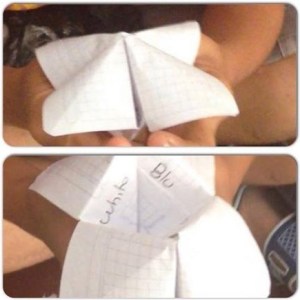
But how many of us remember what they are called. I asked my facebook followers what names they used for this in English or Spanish.
Here’s what we got: Continue reading
Most of us remember these from our childhood.
But how many of us remember what they are called. I asked my facebook followers what names they used for this in English or Spanish.
Here’s what we got: Continue reading
If you are a language teacher, then you know the best night of the week is Thursday evening. This is when some of the best world language teachers come together to collaborative and improve themselves as educators. You don’t even need approval from administration to attend and pay a costly registration fee. This weekly conference  is taking place on twitter, using the hashtag #langchat. A recent topic had some great discussion in regards to tips for starting a proficiency based program.
I personally started working towards a proficiency based classroom a few years ago after years of being very comfortable teaching grammar and watching my students memorize verb charts, and singing songs to remember grammar rules. But I don’t want my students to have to stop mid-sentence to sing a song to remember whether to use por or para. From reading tweets and blogs from my fellow colleagues, I decided I needed to make changes in my own classroom to help my students be able to communicate in the language.
For me, the process has been going on the past few years. Every year I learn more and am able to implement better practices into my classroom. My first start was to use more language in the classroom. An important step was letting students know my expectations for their understanding in class.
 A key change in my class was to ditch the focus on grammar and focus on the communication. For this, I “started at the end” by deciding what the goal of each unit
  was. Once I came up with these objectives, I could “work to the beginning” and start planning what input my students need and what activities I could plan to help them achieve those objectives.
  As a teacher, I aim to give my students as much input as possible before I ask them to produce something. I want to make the topic engaging and appeal to my students’ interest. The characters in the textbook certainly were not going to get my students excited about the language. But talking about the game between Barcelona and Real Madrid did. (See: Connecting Vocabulary to our Students)

Another change I wanted to make was to have my students’ ability reflected in their grades. In the past I’ve seen students who can’t even respond to a simple question leave class with an A and students who just don’t do anything outside of class leave with low grades. I decided to focus my grades on the students’ proficiency. That means

I had to make a big change in my tests. No longer would fill in the blanks or verb conjugations punish students for errors in spelling. If the purpose of our class is to communicate I had to assess students ability to communicate and not whether they could memorize a box. (See: Ditching the Verb Chart)
Here’s some of our earlier posts about our venture toward a more proficiency based classroom.:
Communication Rubric : assessing student production, and giving students a goal to work towards when communicating.
Proficiency Based Exam: How to create a proficiency based exam using your unit’s objectives.
What students had to say about taking a proficiency based exam.
Authentic Input versus Grammar Drills: If a student can conjugate the verb “to eat” in 3 tenses, does that mean they can order food in a restaurant in the target language?
If you don’t have a dropbox by now, you are missing out. This is essential for any teacher who does work at home. I remember the days of working on something at home, putting it on a travel drive (USB stick) and taking it to school to continue working on it or printing . Of course, that only worked if you didn’t forget it!
Thankfully, life has been much easier the past few years with dropbox. And the best part: it’s free! I install the dropbox program on my computer and it creates a folder which stores all my documents. I can create a document at home, save it in the dropbox folder and access the same document anywhere by signing into the website or having the program installed on my work computer.
Also, I installed drop box on my smartphone and I use the app to upload pictures from my phone to my folder so I can easily access it on a PC.
Start with 2 GBs or get an extra 500MB by signing up with my link. So what are you waiting for? Make your life easier!
It’s October, and if you’re a Spanish teacher that means getting ready for Halloween and the Day of the Dead. We’ve compiled some of the best resources around to give you a one stop shop for great teaching materials.
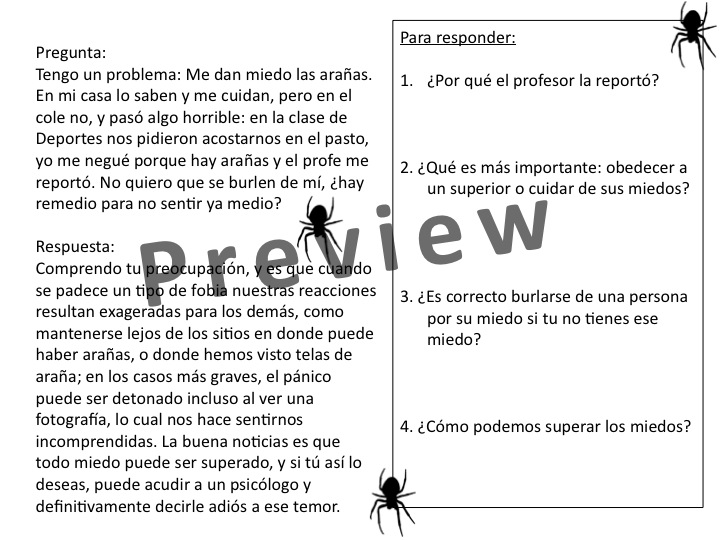
We’ve recently added 2 products featuring excerpts from a Colombian magazine. The first one talks about Hollywood stars such as Justin Beiber and Lady Gaga’s experiences with ghosts. The second one features teen asking questions about their fears with responses from the magazine. Each features questions so you can use print them and use them in your classes right away.


example:
 Continue reading
We’ve written numerous times about using comic strips in your foreign language class. It is such a great authentic resource for students to read in context and the text is short enough that you can use it at even beginning levels. Our favorite authentic comic strip, is Macanudo by Liniers, an Argentina strip that is extremely original and creative. Read our previous post about Macanudo and how to use comics in your class.
If you are looking for comics for specific topics, check out our resource page.
Today we bring you 14 examples of this talent.
Continue reading
We are always looking for authentic resources to use in our lessons. Right now, instagram is the social media of choice for students. We found an instagram full of authentic quotes that pertain to students, especially regarding school. What a great way for kids to read authentic texts and be engaged.
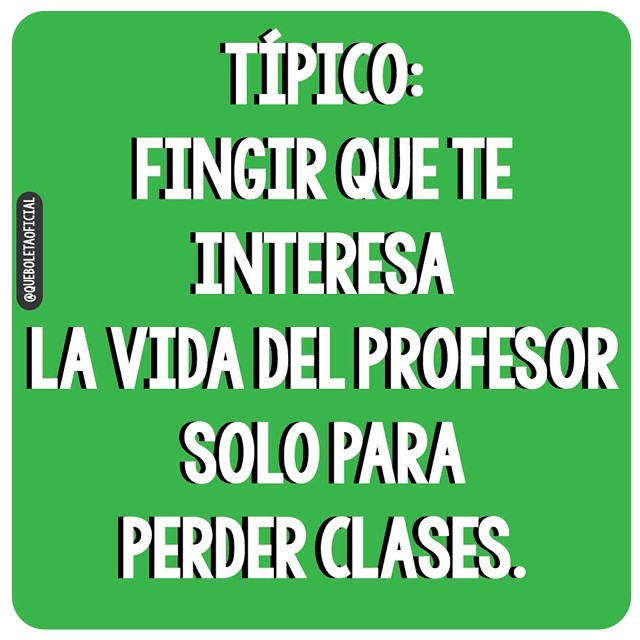
Ways Instagram could be incorporated in foreign language class: Continue reading
It’s here! The 2014 World Cup kicks off today! And while we will be glued to the TV during all 64 games, there are some interesting shows that showcase the history of South America through the context of soccer.
Produced by ESPN, these shows are now available on netflix.
 The Two Escobars focuses on two figures in Colombia who happen to share a last name. Andrés Escobar, a soccer star for the National team, was killed after scoring an own goal in the 1994 World Cup.
The other Escobar, Pablo, was a powerful figure in Colombia’s drug cartel era. And during his time in “prison”, which happened to be his own mansion, he would arrange for soccer teams to come and play at his estate.
 The 30 for 30: Soccer Stories has 8 episodes, but the most interesting regarding South American history is called The Opposition. After a military coup in 1973, Augusto Pinochet ruled Chile by stomping out any opposition. Intertwined in this story is how the Chilean national soccer team qualified for the World Cup when the Soviet Union refused to play in Santiago’s National Stadium, which was used as a torture camp for political prisoners. Continue reading
 Here’s a fun activity to culminate at the end of the year or to begin the year with a review. (See also, Animal Unit) Have your students create they very own Superhero. They can describe the superhero in the target language. Students can even create their own trading card and write in the following information:
Nombre: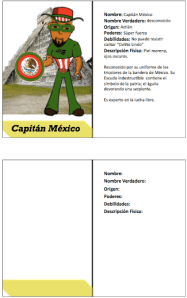
Nombre verdadero:
Origen:
Poderes:
Debilidades:
Descripción Física:
Buy our ready to use unit that comes with a list of essential superhero vocabulary plus a template for the trading card.
With superhero movies being a big hit (such as Avengers, and X-Men) especially among boys, use that interest to connect with your kids and get them excited about coming to class.
Other ideas to incorporate superheroes in class: Continue reading
I saw this picture on pinterest and, like many images, I thought of how I could incorporate it into a foreign language classroom. This post from SewWoodsy featured this door covered in pictures in the style of instagram.

How cool would this be to do on your classroom door or even as a bulletin board? My initial thought was to use album covers from CDs, since they are square already. But then I thought it would be so eye-opening for students to see images that show the culture and represent the beauty of our target cultures and countries. If you’ve traveled, I’m sure you have tons of pictures that you could print out. If not, pinterest or google images is full of eye-catching pictures that will grab your students attention! Check out some of the colorful images of the culture on our Hispanic Countries and Culture pinterest board and I’ve been collecting some AMAZING photos that I re-post on Instagram @spanishworld1

Let students see the real beauty of the culture

Just finished this 12 page packet for the World Cup.
This 12 page packet features a 4 page webquest where students will find out information about the tournament, the teams, and its history. Also features 4 songs including the 2010 World Cup anthem by Shakira and 2 World Cup songs from this year 2014 Fifa World Cup as well as an inspiring song about Mexico’s national team.
Includes links to 8 websites for students to find information (or you can have your students find the information on their own) as well as links to 6 infographics, which are also included in this file.
The song activities include a link and qr code to the music video.
Not sure? Download the free preview by clicking “PREVIEW” underneath the pictures on the left on this page.
Don’t have time for a full packet? Check out our Copa Mundial Infographic, in which  students will answer 7 questions by looking at the 32 teams in this summer’s World Cup.
32 more days until Brazil and Croatia kick off the World Cup. Who are you rooting for?






 SpanishPlans.org