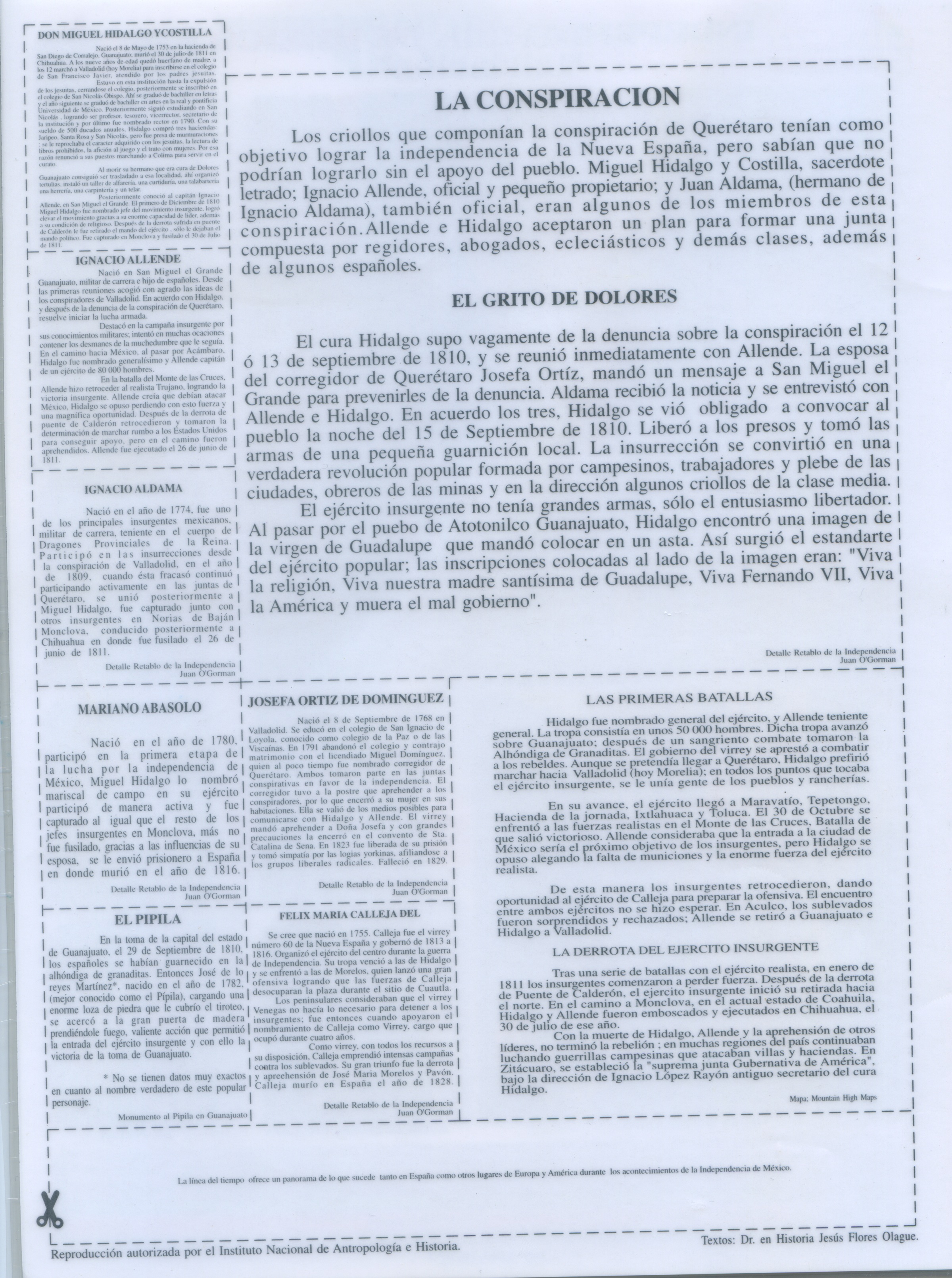
Laminas sobre la Independencia de Mexico

Estas laminas son de México sobre la Independencia. There are 4 pictures, and the back contains the information describing the pictures or events depicted on the front.

Pictures are quite large. To download, right click and choose “Save As”. You can open them up and zoom in or out as needed.

https://spanishplans.org/wp-content/uploads/2011/09/mexico1.jpeg
https://spanishplans.org/wp-content/uploads/2011/09/mexico1back.jpeg

https://spanishplans.org/wp-content/uploads/2011/09/mexico2.jpeg
https://spanishplans.org/wp-content/uploads/2011/09/mexico2back.jpeg

https://spanishplans.org/wp-content/uploads/2011/09/mexico3.jpeg

https://spanishplans.org/wp-content/uploads/2011/09/mexico3back.jpeg

https://spanishplans.org/wp-content/uploads/2011/09/mexico4.jpeg
https://spanishplans.org/wp-content/uploads/2011/09/mexico4back.jpeg

Fore more information and resources on the Independence of México, read our Mexican Independence Day post.

Posted in Culture, History, Resources | Tagged , , , , , , , , , | 2 Comments

Mexican Independence Day

¿Estás listo? Casi es El día de Independencia de México. Although more Americans can pronounce “Cinco de Mayo”, el dieciséis de septiembre is actually a national Mexican holiday. And not just ANY holiday; THE biggest national holiday in Mexico. So big that is gets two days of celebration.

Most Mexicans will be celebrating El Grito de Independencia on the 15th, and Día de Independencia on September 16th. September 15th is actually Independence Day for Honduras, Costa Rica, El Salvador, Guatemala, and Nicaragua. It also kicks starts the month long Hispanic Heritage month in the United States which runs until October 15th.

This is “El Grito” that the President of Mexico will make from El Palacio Nacional:
To see a live shot of El Zócalo in Mexico City, as well as a look at the past 24 hours, check out these live webcam shots.
El Zocolo Grito webcam

You may want to check out FluencyProf’s Comic with accompanying audio describing the historic events or their cloze activity.

If you are looking for some thoughts about these days events, you can find authentic language on twitter. I like to change my “Trending Topics” location to see what are the hot topics from Mexico.

On the right column, select “Change” next to the “Trends”
Choose your Trending Location
For Mexico, you can either select the trends from all of Mexico or the cities of Mexico City or Monterrey.
Trending in Mexico Sept 14 at 7:00pm ET

Where you can read:
-⌚ 14 de septiembre de 1813 – José María Morelos y Pavón proclama en Chilpancingo el documento “Sentimientos de la Nación
-SabiasQue 14/09/1813: en México, José María Morelos y Pavón escribe el documento Sentimientos de la Nación.
-“No estoy llorando, son los Sentimientos de la Nación” Eso hubiera tuitteado Morelos si hubiese existido Twitter en esos tiempos.
#gritosmexicanos Mamaaaaa, no hay papeeeeeeeel…..!!!!
#gritosmexicanos. -Mamá, va a llover… -¡LA ROPAAAAAAAA!
-Nunca creí que el #martes13 fuera día de mala suerte y hoy mucho menos,la vida es demasiado importante como para dejarla a “la suerte” …

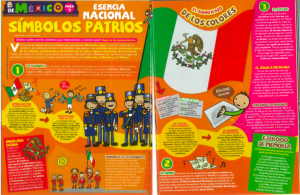
Simbolos Patrios: From revista “Muy Interesante Junior

Anyway, if you are looking for some resources to use with your class for Mexican Independence, for less than a few dollars you can purchase: Mexican Independence Resource Pack:

Celebrate Mexico’s biggest holiday: September 16 with this Independence Day resource pack. 6 pages include the History of the Independence, How it is celebrated in Mexico (El Grito and los Desfiles) Information about the Flag and Coat of Seals, and Facts about Mexico. Also includes links of videos to show in class and how to show youtube videos even if you school has it blocked!

..

.

Or this free download, 10 Common Misconceptions about the Spanish language and the People who Speak it:

Poder de SaberThis 12 slide powerpoint features 10 statements which ask students to decide if they are true or false. Click ahead, and it will tell you the answer and also give an explanation.These are 10 things that a lot of students don’t know, but they definitely should. Features common misconceptions about the Spanish language worldwide and in the US as well as about the people who speak Spanish.This powerpoint should last a 50 minute class period. Some slides also include additional links in the “notes” section for more information.

¡Viva México!

Posted in Culture, History, Lesson Plans | 11 Comments

Graphic Organizers

The following graphic organizers are a great way to help students understand the subject pronouns and verb conjugation.

The Hand Graphic Organizer
1. Have students trace their right hand (or their left hand palm up). The idea is make sure the thumb is on the left.
Using your hand to teach verb conjugations
2. Write in the subject pronouns at the top of each finger, where the fingernail would be. 3 of the subject pronouns relate perfectly with the imagery of the hand. Start with the thumb. The thumb stands for “Yo” because you can use your thumb to point back at yourself. The index finger is “Tú” because you can use your index finger to point to someone that you are talking to. And lastly, the ring finger stands for “Nosotros” because when you wear a ring, it symbolizes your relationship with someone else, “me and someone” equals “we”. Go ahead and add “él, ella, usted” to the middle finger (nothing to note on this one!!) and “ellos, ellas, ustedes” on the pinky. Someone students have come up with you make a “pinky promise” with “other people”.

3. Have the students think of a verb. If you are studying -ar verbs, then they would choose an -ar verb. Have them write this at the bottom of the palm and to draw a quick sketch in the middle of the palm.

4. Write the forms of the verb in each finger according to the subject. You can do this activity with any tense you are studying. The end result:
Using your hand to teach verb endings in Spanish5. Finally, cut it out. You can hang these up in your classroom or have the students use them as study tools.
Hand cutout to teach Verb Conjugation

Make a bulletin board of these…

Bulletin Board of Verb Conjugation Hands

Bulletin Board of VerbHands

For more graphic organizers for your Spanish class, including verb graphic organizers for conjugations, and for a FREE verb chart document……..
Continue reading

Posted in Flashcards, Resources | Tagged , , | 9 Comments

August News

We are excited to be honored this week as the “Featured Teacher Author” in TeacherPayTeacher’s weekly newsletter which goes out to thousands of teachers. To see the newsletter (along with its 10 free teaching downloads) click here.

We are also now a contributing blog author at The Lesson Cloud and have posted a blog about a good starting activity for back to school as an icebreaker or getting to know you activity, which I just used today with my homeroom.

If you follow us on twitter or facebook, you know we often post some corny chistes. We keep a log of them on our Chistes page, where you can find a few of our comics as well. We are please to announce that we are now selling a “Papa” Comic focusing on the differences between “la papa” “el papá” and “el Papa”. For only 1.75 (which includes FREE SHIPPING) you can order your own postcard of this comic to display in your classroom.

And speaking of comics, we would like to offer our latest creation of this Spanglish joke:
Spanish Comic

Posted in Chistes | Tagged , , , , | Leave a comment

Spanish Bulletin Board

It’s that time of year again. Putting up bulletin boards and getting your classroom ready for the students. Hope you had plenty of Stikki Clips on hand to hang up those posters, otherwise cross your fingers that you won’t walk in on Monday with the posters laying on the floor.

This year I decided to make my bulletin board reflect the theme of Mexico. I have two bulletins on the side of my white board, so I bought red and green plastic tablecloths at Dollar Tree for $1. It is such much easier than using that big ol’ butcher paper that all schools have.

On the green side, I put up a poster of “Mexico” that I got free years ago by writing to airline companies and asking for donations. I don’t know if they still do this, but it might be worth a try if you need some free decorations and posters. You will also see a panoramic picture of “Piramide del Sol en Teotihuacan” and other souvenirs I have bought or collected over the years, including some leftover currency.
Bulletin Board in Spanish class

For the right side, on the red background, I decided to feature two of Mexico’s most famous artists: Diego Rivera and Frida Kahlo.
Diego Rivera BulletinI have 3 pictures that I took from when I visted La Casa Azul and Diego’s studio. The rest are postcards of the artists themselves or of their works, or brochures from exhibits. I also bought the Diego and Frida “Facebook” poster from Teacher’s discovery, which you can see closer here. I will also be putting the Scholastic Books of “Diego” (Jonah Winter) and “Frida” (Jonah Winter) which have fantastic illustrations! Great books if you don’t already have them.

The end result:
Spanish Classroom

Posted in Bulletin Boards | Tagged , , , , , | 1 Comment

Why I don’t give my students Spanish names

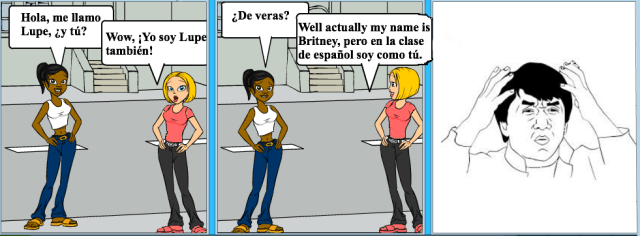
You won’t find a Lupe in my classroom. You won’t find a Felipe, Margarita, José, Rosa, or even Pedro. That’s because I don’t assign “Spanish names” to students in my Spanish class. So yes, I call on Dylan, Tiffany, Chad, Brett, and Brittany.

I don’t see the “appeal” of assigning fake names to my students. The first few years I taught, I started the program so students were not accustomed to having Spanish names. When I moved schools, students wondered why they no longer chose a name like they did the previous year.

When students ask me, the conversation usually goes like this:

“Profe, why don’t we have Spanish names?”
“Do you have a ‘Math name’? Does your math teacher call you ‘Hypotenuse?”
“No.”
“Ok, then. When your Math teacher gives you a ‘math name’, and your History teacher gives you a ‘history name’, then I will give you a Spanish name”

I never understood the point of having a special name just for class. I guess my first reason was to make connections with the actual student. I remember when I was in high school I only shared Spanish class with certain students. I could tell you their Spanish name, but I had no idea what their actual name was. That just seemed odd to me.

Becoming a teacher, I didn’t want to memorize twice the number of names. Call it lazy, but when I meet Danny’s mom at conferences, I want to be sure I am talking about Danny and not Pepe. And just because they are speaking Spanish, doesn’t mean they need a new name. If students go to Mexico, people aren’t going to start calling them “Marta” instead of “Madison”.
Spanish names

I feel this perpetuates the notion that only some people are allowed to speak the language. “Tom” can’t speak Spanish, but “Juan” can. I want my students to know that ANYONE with any name can speak the language.

The point is, your name doesn’t have to be “Spanish sounding” in order for you to speak Spanish. Britney can be the name of a Spanish speaker. It is just another unnecessary stereotype that we perpetuate by saying that because you are speaking Spanish your name must be in Spanish too.

Some teachers will argue that having Spanish names is “fun.” Some say it helps students with pronunciation of authentic names. What do you think? Do you give your students Spanish names? It’s a worthwhile discussion to have as a department. If you decide to give Spanish names, I hope it is more than just because it is “fun”, “kids like it” or because it’s “always been done.” If those were acceptable reasons, wouldn’t every subject be choosing different names?
Posted in Discussion/Methodology | Tagged , , , , | 117 Comments

Using Magnets to teach Location

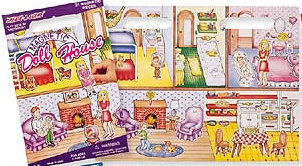
This activity feels like a game because students are engaged and they get to play with magnets. Little do they know, they are also following instructions in Spanish, and responding to verbal or written cues to accomplish a task. Using magnetic “Create-a-scene” playsets and similar products, I have used this activity in conjunction with Location of Prepositions.

DollHouse

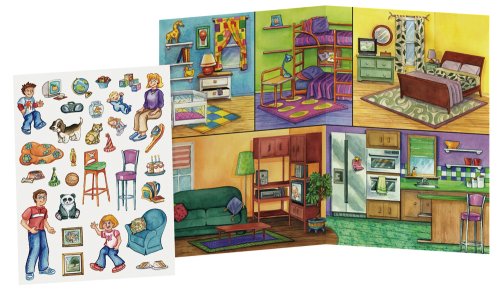
There are many scenes, but I mainly use the “Doll House” playset with our Casa unit.  If you do stations, you can lead a station where the teacher physically verbalizes the cues while the students put the appropriate magnets in their appropriate locations. Or you could have the cues written out and the students must read the cues. Or if your school has the technology, you could have a recording on an mp3 player or iPod and the students have to listen to the track to find out where to put the pieces.

You can have a picture of the “correct” placement of the pieces ready for the students to self-check when they have finished. This is a great listening and processing activity for students. This type of lesson could be adapted for various levels and units, since they are different types of Magnet Boards available besides the “Doll House”.

Places to buy these magnetic boards, which are about $12 each.
1. Beyondplay.com
2. Amazon.com
3. JanellePublications.com 
I happened to find one at a garage sale and negotiated down to 50 cents!

Board and Magnet Pieces

For additional lessons on Location:

Cuerpo Unit

5 page Prepositions activity integrated with Body Vocab

Prepositions of Location

9 Page Lesson Unit

Posted in Games, Lesson Plans, Resources, Speaking | Tagged , , , , , , , , , | 7 Comments

Online Flashcards

My favorite web2.0 tool for the foreign language classroom has to be WordChamp.com I started using this site several years ago, a little at first, but now have really started to integrate it into my classroom.

The site is free for public schools, and teachers can create “classes” so when their students log in, they have access to the teacher’s pre-made flashcards and can start on “homework” set up by the teacher. Teachers can create a magnitude of activities, depending on the type of flashcards.

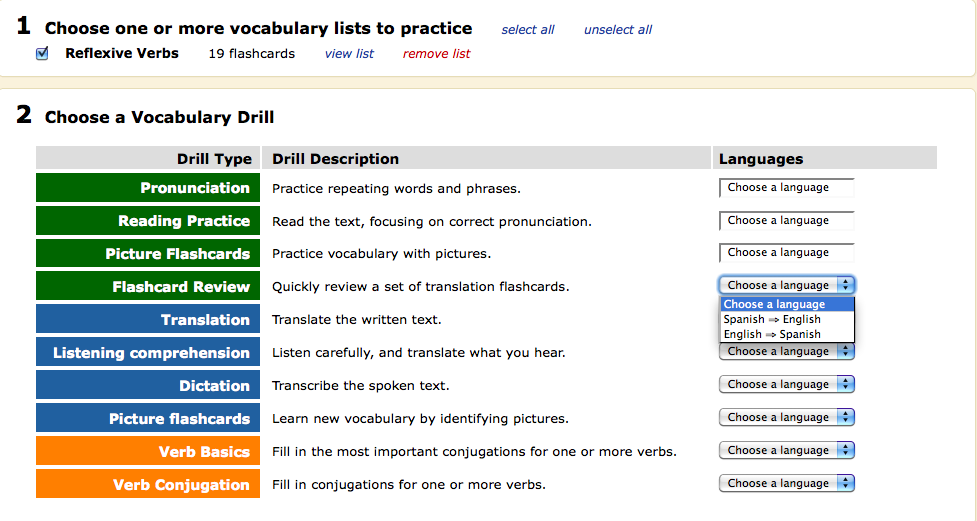
Just some of the options of activities you can select

The best part is, you can attach audio and a picture to every word, so students can hear a native speaker pronunciation and associate the word with a picture.

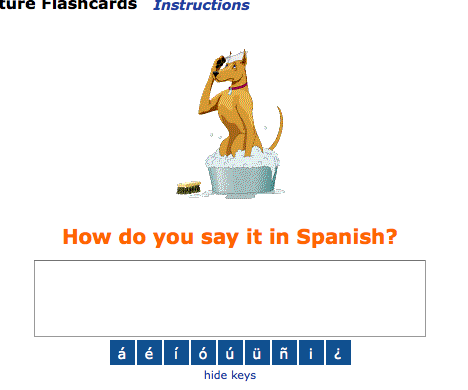
"Picture" flashcard. Type in the word.

In the above activity, students type in their answer (bañarse) and submit and it will give them the correct answer if they are wrong.  If your list has verbs you can have your students practice the conjugations (you can set which forms and which tense), much like other sites that only offer these services such as conjuguemos.com. Why limit yourself? Open yourself up to loads of potential with wordchamp.

I have created thousands of vocabulary words into flashcards…

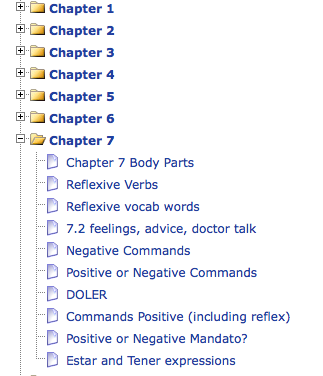
My Folders of Vocabulary

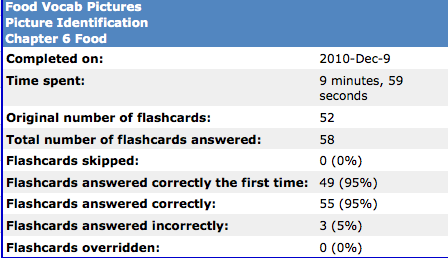
When you “assign” an activity, you can even see a detailed student report summary.

Student Report

I used to just use this website during class time by taking my students to the computer lab. Now, I assign certain activities as required homework and also post other activities as suggested practice. I give students several days to complete the homework, helpful since 100% of my students have computer and internet access at home, although they also have time to use the computers in school. I also will use it if there are a few minutes at the end of class to review new vocabulary. I project the picture to the class, and they (sometimes I call on every student or sometimes we do it as a whole class) say the word.

For other web2.0 tools for the classroom, check out our “Tech Tools” sqworl.

Posted in Flashcards, Vocabulary, Web2.0 Technology | Tagged , , , , | 1 Comment

TiraComica

We are now posting all the jokes, chistes, and tiras cómicas, that we regulary post on our twitter account, on a new page on our blog: Chistes. So if you are ready to get your funny on, check out that page regularly.

Here is today’s new comic:

Click to enlarge

Posted in Chistes | Tagged , , | Leave a comment

Teacher’s Back to School Event

By now you’ve checked out our summer savings post, our 10 Spanish Freebies post, and as school gets ever closer, you’re now starting to think about the upcoming school year. Well, fear not. We are here to offer you good news! TeachersPayTeachers is hosting its annual Back To School Event with 10% off everything. In addition, we are also offering 10% off all our products. That’s 20% off! And we are not the only ones. Many teachers are participating in offering their own discounts as well. So if you are a new teacher, been assigned a new class to teach, or are just looking for new engaging activities, check out the links below….

For a free account to download your purchases (or to download thousands of free teaching resources), sign up now.  And don’t forget to bookmark this page and look for more Spanish lesson ideas throughout the year.

For a list of sales and featured products and how to get the 10% off PROMO CODE…. Continue reading

Posted in Resources | Tagged , , , , , , | Leave a comment