Videos y Fotos for LA COMIDA unit

Teaching a unit about La Comida? Here’s some media resources for your Spanish classroom for this Food unit:

Música/VideosMesero Groover/Audio

  • Canción “Chocolate” de Jesse y Joy
  • Canción “Una en un millón” de Jesse y Joy (Cloze lyrics and activity)
  • Youtube “Archibaldo y las hamburguesas” El mesero Groover sirve una hamburguesa chica y otra bien grande.
  • Youtube “Pancho pide agua” Pancho quiere agua pero tiene un mesero con muchas preguntas.
  • Youtube “Comer Galletas” Monstruo Comegalletas canta de galletas en todas las estaciones del año
  • Videos de “La Receta de la Abuelita” – How-to videos on how to make various Mexican dishes, in Spanish. Great input for students! Including how to make tacos de lengua, salsa, churros, mole, and more! Most videos approx. 5 minutes.
  • Video/Audio from native speakers with ordering at a restaurant interviews. Students sure enjoyed José’s enthusiasm! These interviews also include transcript!

Dibujos y Fotos

Taco Bell is Not Mexican Food
Here’s an interesting post on the difference between Taco Bell and a real Mexican Taco Bell with an article on what Mexicans thought when Taco Bell opened up restaurants in Mexico.

. Continue reading

Posted in Chistes, Resources | Tagged , , , | 2 Comments

Resources for LA ROPA unit

Teaching a unit about La Ropa? Here’s some resources for your Spanish classroom for this Clothing unit:

Música/VideosTarget Ropa

Dibujos y Fotos
Comic by Macanudo
Macanudo Fellini Enriqueta

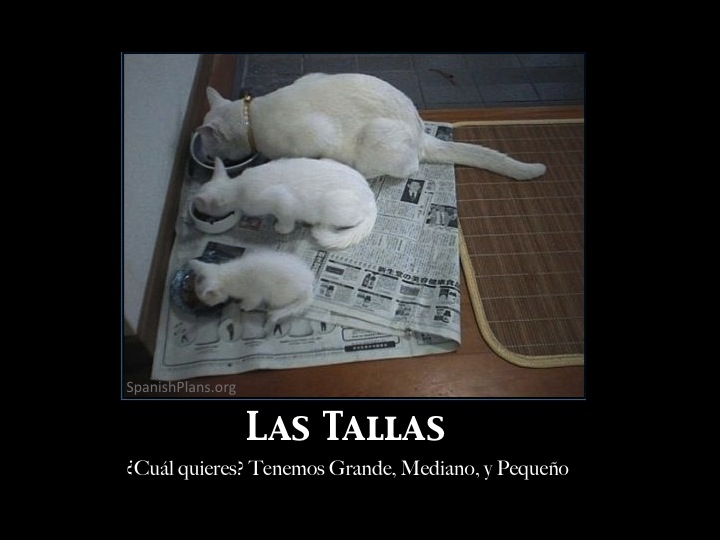
Pequeño Mediano Grande

Twitter user @profeslack tweeted “There is no better way to start the day than perusing http://awkwardfamilyphotos.com/  looking for pictures to use in clothing unit!”

For more pictures, check out our collaborative Clothing Unit board on Pinterest.

Actividades

  • El Corte Ingles Webquest: Have your students navigate through the Spanish Spanish Ropa Vocabdepartment store, El Corte Ingles, while discovering the meaning of clothing vocabulary words on their own. Very motivating and engaging lesson. For instructions and a pre-made handout, purchase our webquest on TpT. Can even have students “purchase” an outfit on a pretend budget of Euros. Continue reading
Posted in Lesson Plans, Resources, Speaking, Vocabulary | Tagged | 2 Comments

Escribir una carta a Santa

Resources para La Navidad
With vacation approaching and students getting ready for the holidays, today students wrote a letter to Santa. It fit in perfect with our ‘shopping’ unit to talk about items they would want or not want. For those who always get a pair of socks, or an ugly sweater, they can put these in the negative.

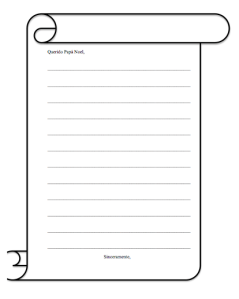
I printed out the following letter template and put the following picture up on the board with the requirements with included the recycling of many previously learned material.

Carta a Santa

Download Carta a Santa


Escribir una carta a Papa Noel

Click to enlarge

arbol de navidadSpanish Christmas ComicAnd what gift does Santa bring to los niños traviesos? Find out in this comic.

The song “Regalito” by Juanes also has some good phrases such as “Sé que te va a gustar” y “adivina lo que es” y “te regalo” among others.

Another holiday related song is “En tus brazos estaré” por Jesse & Joy.

And to leave you all with a chiste:
How does a sheep wish you a happy holiday?
¡Fleece Navidad!

Posted in Projects | Tagged | Leave a comment

Language Lab Activity

For those of you who have language labs in your building, this post may not be very enlightening. For those of us that teach in a building without such luxuries, we too can incorporate similar assessments and practice with other technologies. If you have access to iPods, iPads, a bring your own device policy, or even access to computers or recording devices, you can have students record in pairs.

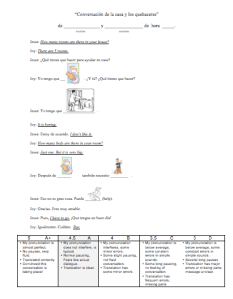
I gave my students a script to complete with their partner. Using the app “QuickVoice” or “Voice Memo” students were able to record themselves and share the file with me as an e-mail. Here is a video clip of the script and a sample student recording:

I can get a short, quick assessment of their fluency and pronunciation on an individual basis and only spend 10-15 minutes of class time doing it. By working in pairs, I only have 1/2 to listen to. The parts they have to translate tells me how well they know that information while the scripted parts are a good sense of their pronunciation.

Language Lab Rubric

Quick Speaking Assessment

For a sample script with a rubric, download our Language Lab Script Rubric.

Posted in Speaking, Web2.0 Technology | Tagged , , , | Leave a comment

Dragon Dictation

The app Dragon Dictation is an interesting app for students to practice their pronunciation. I give student a script to read from and they record themselves to see how well the computer can understand their accent. First, make sure you change the settings to Español (Américas) or Español (Europa) otherwise you will get some very funny sentences in English when the students are speaking in Spanish.

I could suggest the students record small chunks at a time, otherwise the app sometimes doesn’t process large chunks and students will have to re-record. Students will also have to tell the app when to place in punctuation so typing this into the script may be helpful for students. Clicking the info button on the button of the app will open up a “Tips” screen which includes common commands such as “punto”, “nueva línea”, “nuevo párrafo”, “coma” and more.

Obviously, the clearer their pronunciation is the more likely the app is to recognize the speech correctly. However, with a classroom full of students, it is difficult if there Continue reading

Posted in iPads, Speaking | Tagged , , | Leave a comment

Univision App

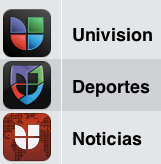
Univision has several apps available for the iPad including “Univision”, “Noticias” and “Deportes”. I used the regular “Univision” app today and let my students explore different articles that would be of interest to them. I had first year students engaged in reading articles in Spanish because they would find things to read that they were actually interested in. As we talked about in our last post, making connections to students’ interests goes a long way in getting students interested in the language itself.

Whenever students are looking at a text, I remind them to use three strategies to help: 1) Cognates 2) Own vocabulary of words they have learned, and most importantly 3) context. It was also helpful to have the “Wordreference” app so students could look up definitions for important words. The four-finger swipe to switch between open apps is truly helpful too.

In the Univision App, clicking on “sitios” at the bottom brings you to various Continue reading

Posted in iPads, Web2.0 Technology | Tagged , , | 1 Comment

Connecting vocabulary to our students

I realized something important this week while going over our unit’s vocabulary. The vocabulary is “household chores”, part of the “House Unit”. After the initial vocab introduction, we started talking about what chores students do. I quickly realized that most of my students don’t do any chores at all. So it’s difficult to “say what chores my siblings and I have to do” and “how often” as our objectives would require.

During one oral activity when students were to walk around the room and ask their classmates questions, I had to interject to keep them in the target language. I reminded them the point of the activity was not to get every line filled with an answer, but rather to be practicing their communication. In doing so, I made a comment that left me questioning the purpose of the unit. I said “Do you really care if Johnny washes the dishes and how often he does it? No, of course not. That’s not the point. The point is to be communicating.”

But how can we expect children to want to speak in the target language if they are talking about something they have no interest in. Let’s be realistic; Nobody cares about what chores their classmates do. How engaging is talking about chores? Why are we even teaching these words?! How often is Johnny going to encounter a Spanish speaker and tell them that he rarely vacuums the floor?

Who and what are your students interested in?

Sure, eventually, in order to become fluent, knowing specific vocabulary like household chores would be useful. But if we want to keep our beginning levels students interested in the language, we have to make the learning both USEFUL and INTERESTING. You can bet that is the last time I will be teaching vocabulario de los quehaceres.

I did a quick, informal survey with my students today and asked them what activities they do at home and what topics they wanted to learn in Spanish. Some of the more popular responses were in regards to Sports, TV, Celebrities, and using the Computer. So why are we wasting our time with teaching such words like “ajedrez” and “patinar” if our students really don’t do those activities. Instead we should be teaching “mandar un texto”, “ver un video por Youtube”, “comentar en facebook” and activities that are students are interested in. Don’t just stick with the vocabulary that is in your textbook. Remember, words are not part of your curriculum. I doubt your curriculum says to teach “patinar” with “me gusta”, but rather states to “talk about likes and dislikes”, so let’s actually give students the words for the activities they really like to do.

And when it comes to the textbook, do your students really want to describe a picture of some guy named “Juan” on page 25 of some textbook or would they rather describe the members of One Direction or characters from their favorite TV show or movie? We must connect with our students if we want them to connect with the language.

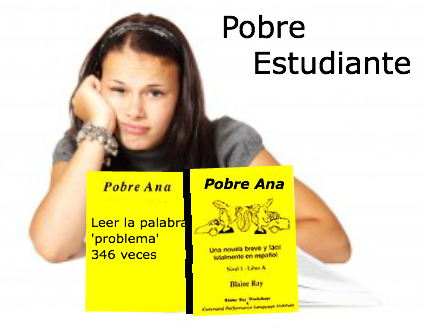
I brought in some teen magazines I had purchased in Argentina and immediately my students were interested in picking them up and looking through them. Have them read about “Pobre Ana” and ask yourself “Why would they care?”

Here are 2 teen magazines that have articles your students are going to WANT to read. You can see articles from”Tu En Linea” online.
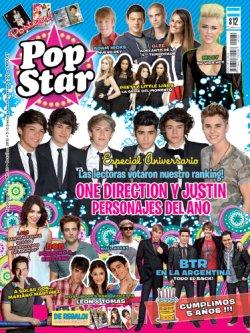
    Tú

Posted in Discussion/Methodology, Vocabulary | Tagged , | 9 Comments

Que hora es

Do your students have trouble telling time? Thankfully, my school has digital clocks in each classroom and students have been able to tell me the current time. Last year, I introduced additional clocks in my room to be able to tell the time in various capitals in Latin America.

time in spanish

However, what I have noticed is Continue reading

Posted in Discussion/Methodology | Tagged | 5 Comments

Proficiency Based Exam

At the beginning of the school year we undertook a new philosophy of teaching and assessing our students. As we discussed in our Communication Rubric post, our assessments would assess what students are able to produce themselves, instead of what they couldn’t do. No longer would our tests include multiple choice, fill in the blank, or true/false statements. Instead, our tests (which we don’t even call a ‘test’ but rather an ‘assessment’) would be all production based. After 2 end-of-unit assessments this year, I am thrilled. I’ve given one writing assessment and one speaking assessment. I’ve seen kids that would typically do horrible on traditional tests do quite well on the proficiency-based assessment. They were able to tell me what they knew how to say. Was their grammar perfect? Not at all. Did they use every single vocabulary word from the unit? Nope. But were they able to communicate and be understood? YES! And I think those students should be proud of that.

To plan your own assessment, Continue reading

Posted in Discussion/Methodology | Tagged , | 4 Comments

Doll House iPad App

If your Foreign Language program has access to iPads, here is an app you need to check out. It is free and is fantastic to use during your Casa unit. It’s called Kids Doll House and it is made by Levitan Software. It is a very basic program, but it gets the job done. This app is such a great way to check for comprehension. Students describe to each other where the different furniture is in the house.

Because the house in the app does not have specific identifiable rooms such as kitchen, bedroom, bathroom, etc., students must listen to the description of the location of the room in order to place los muebles in their right place. Such an engaging and hands-on activity for students to practice house vocabulary and prepositions!

Place the furniture in the correct location

Certainly you can have students put furniture in the house and have them describe the house they created to their partners. But some students may need some good scaffolding to get to this level.

That’s why, for our own class, we created scripts for the students to read to their partners. It gives them the opportunity to read (and their partner to hear) correctly stated sentences. It’s available for purchase and saves you the time from having to create your own. Such a time saver. Check it out here.

One students read a script while another student work on the iPad.

Continue reading

Posted in iPads, Resources, Web2.0 Technology | Tagged , , , , | Leave a comment