What I love about March Music Madness is that students get a peek into what music is popular in other parts of the world. It’s a way to connect our students to the language. Who doesn’t love music? When you have students start singing a song in class or telling you how they listen to the songs at home, you know it’s doing its magic.
As Dustin Williamson says: “Quite honestly, MMM is more about having fun, listening to music, being exposed to different genres and making March better in my classroom.”
I look for music that is A) Current (from the previous year only), B) Popular and not obscure and C) appropriate. This year our bracket has 25 artists, 7 women, 9 countries and over 2.3 billion hits on YouTube. It also includes different genres including Bachata, Pop, Urbana, y Regional Mexicano.
 Students don’t need to understand the lyrics of the whole song to enjoy it. How many of us listen to English music and get the lyrics wrong or don’t understand everything? The music is the hook so don’t worry if the song is not 100% comprehensible. However, you can go over certain high-frequency parts of the song to introduce new words or point out a word they know in a new context but most of the language that we use in class is to describe the song, opinions of it, talk about how many votes it has and which song they think will win.


 passport. There are many applications for using this: marking off I-Can-Statements, marking off completion of certain tasks or units of study. Personally, in my classroom, I use them as students finish reading novels about Hispanic culture. Recently, we re-designed some of our stamps and one of our customers and fellow Spanish teacher shared with us a template she uses with her stamp set.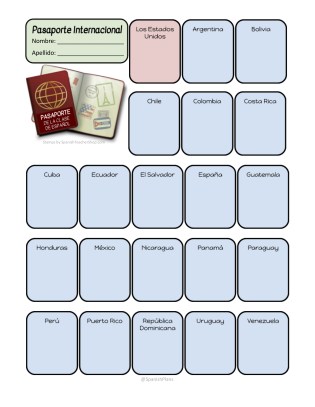







 SpanishPlans.org