Ditching the verb chart

A great blog post from French teacher @CecileLaine on changing your teaching strategies from verb charts and grammar based teaching to comprehensible input which will lead to performance based assessments where students actually use the language to communicate. By teaching verb forms explicitly we are teaching “about the language” whereas we should be teaching “in the language”.

Authentic input versus grammar drills, a case study

I used to teach the verb “être” (to be) using a fun grammar song. We would learn the song, put all the verb forms in a verb chart, and practice, practice, practice through drills, conversations, and various writing activities. Sounds familiar? Well, these past two years I have completely changed the way I do this, and this week, rubber met the road on my proficiency philosophy.

No more verb chart, no more grammar drills

First, I ditched the verb chart. Boy I was scared, how would my students remember all the forms? Then I implemented comprehensible input and learning phrases as opposed to grammatical forms. Since the 7th grade, my students have been learning various forms of “to be” in context: we first learned to talk about ourselves so they picked up phrases such as “I am intelligent”. Then we moved on to questions and answers, so they picked up phrases such as “are you mean or nice?”. Then we talked about celebrities, family members, friends, and they picked up phrases such as “Justin Bieber is nice, Taylor Swift is nice, but The one Direction boys are awesome”. With lots and lots of input, they got most parts of the verb without ever having to put it in a verb chart. I never assessed them on what part of the verb they knew (such as a “fill in the blank” or “match subject to verb” or “conjugate this”), but rather on what they could do with the language (click here for an example of performance assessment with an emphasis on what students can do as opposed to just demonstrating grammar accuracy).

read the read of her post here.

If you are teaching verb charts and grammar, the students output will be limited. If you are using authentic input, the students will be able to produce the language.
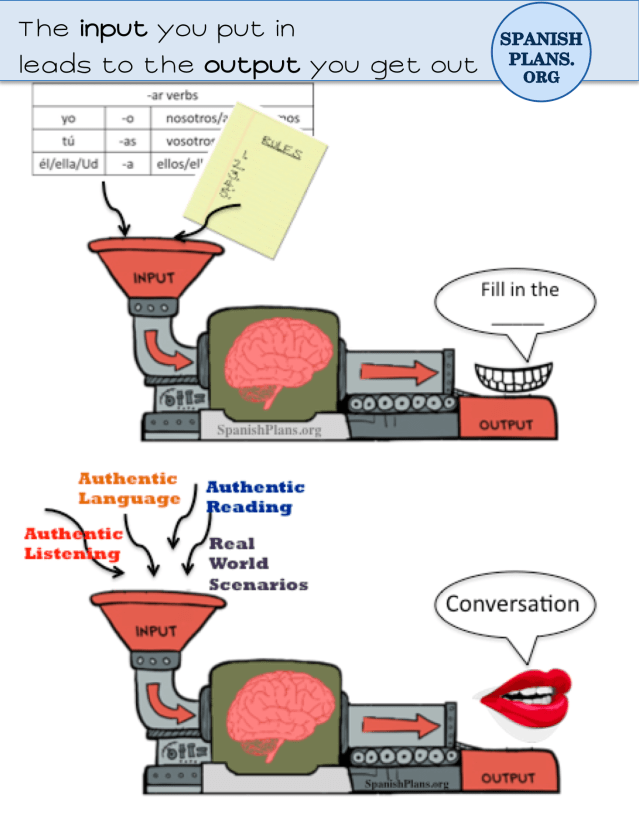
Input leads to output

For links to authentic input check out our Resources page to find input broken down by various topics.


Posted in Discussion/Methodology | Tagged , , , | Leave a comment

Snow Day

A lot of students think teachers hate snow days. If only they knew the real truth…

Teachers Love Snow Days

Continue reading

Posted in Uncategorized | Tagged , | Leave a comment

Adding Fireplace to your classroom

I’m guessing your building principal isn’t going to approve any plans to add a full functioning fireplace to your classroom. I don’t blame them. But we can still set the mood with a nice, relaxing, crackling fireplace in your room.

If you have a projector in your classroom, project these on full screen, and you’ve just set an awesome mood in your classroom as you read a story, as kids work quietly on homework, or just to create a warming scene.

Virtual Fire Animated Gif Continue reading

Posted in Uncategorized | Tagged , | Leave a comment

Top 5 Sub Plans

It’s that time of year…. coughing, sneezing, child puking all night. Whatever the reason, we all need a good sub plan ready to go. Here is our top 5 sub plans for Spanish teachers:
Top Sub Plans Continue reading

Posted in Lesson Plans | Tagged , , | 1 Comment

Top Four Telenovas for Learning Spanish

Top Four Mexican TV Shows for Learning Spanish
By Katie Collom  (guest blogger)

We all wish language learning could be a bit less of a pain – and don’t some of us look forward to the day when some magical potion will make learning any language easy. Spanish is definitely a language to seriously consider taking on; as the second most popular language in the world, it’s a great one to have as part of your repertoire. But consider the problem of learning how to actually speak and communicate like a native: learning a language such as Spanish in the classroom is all very well and good, but where can you go to pick up on slang or practice your listening skills if you live in an environment where Spanish is not generally spoken?

The answer is easy: Mexican telenovelas (soap operas) and TV shows are famous the world over and one of the best ways of learning how to navigate the beautiful undulations of the Spanish language. So here are my top four picks for Mexican TV shows which will help you in your Spanish journey: Continue reading

Posted in Uncategorized | Tagged | 3 Comments

Proficiency Based Exam

After finishing our recent unit and taking the proficiency-based assessment, I gave the students a short google survey to gather some feedback. I think it is important to give students a voice in their learning and let them know you consider what they have to say.

88% of students responded that they felt their grade on the assessment matched their ability to use the language to meet the unit objectives. What students liked about the assessment:

  • I liked that we got to use as much information we knew to try and get the best grade
  • I liked that I was able to use any vocab I wanted to on the test and that there could be a variety of different answers.
  • I liked how the test gave you the opportunity to show what you know and not be limited to what was required. I could show what I knew and have my grade reflect that.
  • I liked the freedom we had to write what we wanted.
  • It actually measured knowledge.
  • How we got to fill out the speech with our own ideas, and not just translating like we did last year.
  • We got to talk about what we wanted too and it was not specific on every single word we have so say.
  • I was able to learn and use what i knew on the test. I could show you that I knew it.
  • That there was more than one answer that could be right.
  • You could write whatever you wanted to write. It didn’t tell you exactly what to write it just gave you guidelines.

Some students were comforted by having guidelines and others students wanted more freedom. Things that students “didn’t like about the assessment”.

  • You told us what to put in each box instead of us picking what we wanted in the boxes
  • That we didn’t get to choose what we got to write in the boxes
  • It also made the assessment more challenging because we had to pull ideas out of our brain randomly.

La Ropa De Compras Test

For additional proficiency based exams, check out our catalog’s proficiency section.

Posted in Discussion/Methodology | Tagged , | 3 Comments

Revista Tú

I love buying magazines when I am in Latin America and seeing what I can use in the classroom. I have acquired a few issues of the Mexican teen magazine “Tú” and have found many of my students eager to look through the copies.

Good news. You can order a digital subscription. Give your students access to the latest in Pop Culture… en español!

tu noviembreBuenas noticias! ¡Ahora la revista Tú México en versión digital! Ya puedes tenerla en tu compu, iPad o iPod… Deja que tu mejor amiga te acompañe cada 15 días con lo mejor de moda y espectáculos, belleza, ligues, osos y divertidos test, pero ¡ahora en su versión más tecno! Suscríbete ya.

Disponible en: PC/MAC , Win8, Rim, Android, iPad

12 números por  $16.00 US

or $1.50 cada edición

When you click to check out, you will need to set up an account with Zinio and from there you can send payment through paypal.

Issue of Tú: $1.50Students engaged with authentic language: priceless!

Related Posts:
1. Authentic Resources of High Interest Topics
2. Connecting vocabulary to our students

Posted in Culture, Resources | Tagged , , , | 2 Comments

Engaging Food Input

One of my favorite units is teaching about food. You can probably tell from the number of resources I’ve shared dealing with Comida.

Here are some great input that will have students remembering key phrases and vocabulary related to the Spanish food unit. Also, below is our first ever caption contest.

Napoleon Dynamite clip en español.

Tienes que comer Tina

“Estás muy gorda, pero sigue comiendo.
Tina, come. Cómete todo. ¡Tienes que comer!”

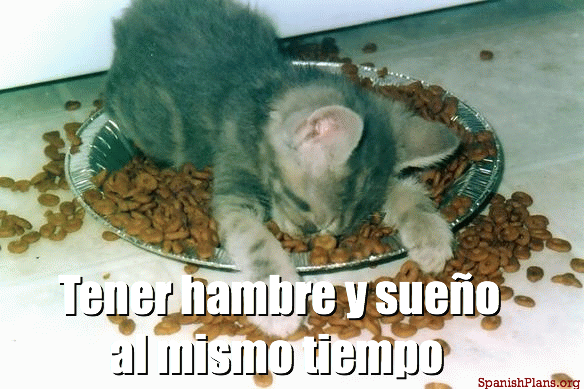
hambre y sueno Continue reading

Posted in Resources | Tagged , , , , | 1 Comment

Authentic input versus grammar drills

With lots and lots of input, they got most parts of the verb without ever having to put it in a verb chart. I never assessed them on what part of the verb they knew (such as a “fill in the blank” or “match subject to verb” or “conjugate this”), but rather on what they could do with the language (click here for an example of performance assessment with an emphasis on what students can do as opposed to just demonstrating grammar accuracy). My students were communicating, doing well, I was on a roll, I was invincible…

via Authentic input versus grammar drills, a case study.

Language Learning

Language Input determines Language Output

If we want our students to be able to “order at a restaurant”, then giving them the forms for the verbs “to eat”, “to order”, “to drink”, “to bring” in the present and past tense will not give them the necessary input for this skill. However, if we show them video clips and audio clips of people of people ordering food, images with captions of restaurant situations, and practice asking them questions that a waiter would ask and guiding their answers, then they are much more likely to be able to achieve this skill.

Posted in Discussion/Methodology | 4 Comments

Resources for LA MODA unit

In addition to the resources available at the above link, we’ve compiled some additional resource to implement in your Spanish classes’ units for teaching La Ropa/La Moda.

el estilo de Lea Michele
El Estilo Fashion de Lea Michele

estilo fashion de Taylor SwiftEl Estilo Fashion de Taylor Swift

Continue reading

Posted in Resources | Tagged , , | 1 Comment