Use descriptions of missing people

As your students learn about physical descriptions, there is a very easy way to incorporate authentic language sources that even a level one student could interpret. Using the notion of a “missing person ad” they students have a clear context of what they are looking at. They do not need to know every word to be able to figure out the meaning of some of the descriptions. Cognates and context are a huge advantage in this activity.

For current missing persons report, you can check the Mexico City’s page on Personas Extraviadas y Ausentes or other lists of Extraviados, Personas Perdidas, or even Los Desaparacidos de Argentina, which would be a good way to tie in the events of the military dictatorship during 1976-1983.

Great way to talk about different hair, skin, and eye color. If you put together a list of several missing people you can ask questions such as:

¿Quién tiene los ojos claros?
¿Quién tiene el piel moreno?
¿Quién es el mayor?
¿Cuántos años tiene la niña?

You can also have students infer information. What is the difference between “Lo has visto” and “La has visto“? Based on the answer given, do you think “Complexión” refers to the skin? What do you think “señas particulares” means?

For a pre-made lesson looking at 3 missing children with 9 questions, check out this ready to use worksheet for only one dollar.

Posted in Vocabulary, Web2.0 Technology | Tagged , , , , , | 1 Comment

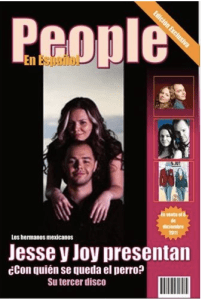
¿Con quién se queda el perro?

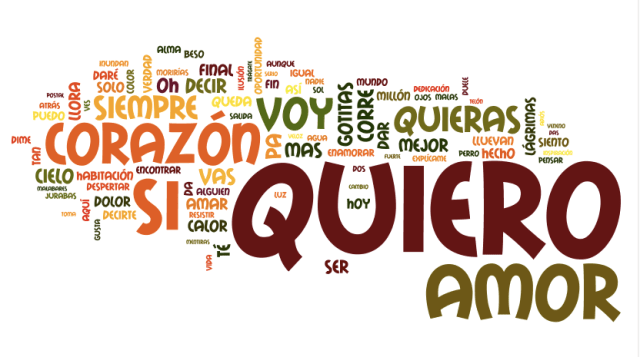
Ya que el nuevo disco de los hermanos mexicanos, Jesse y Joy, logró ser disco de oro en su primera semana, presentamos las letras del disco, ¿Con quién se queda el perro? en menos de 90 palabras.

Usando “Wordle.net“, pusimos todas las letras de las 13 canciones (sino las de “Perfecta” porque no las encontramos). Wordle crea un diseño de las palabras poniendo las palabras más grandes a las que aparecen más. Ya hemos hecho esto con el disco de “Electricdad” de Jesse y Joy y también el disco de “Drama y Luz” de Maná.


Haz tu propio Wordle (¡gratis!) con las letras de tu canción favorita y pon el link en los comentarios.

Posted in Music | Tagged , , , , , | 4 Comments

Using Calendars to decorate the classroom

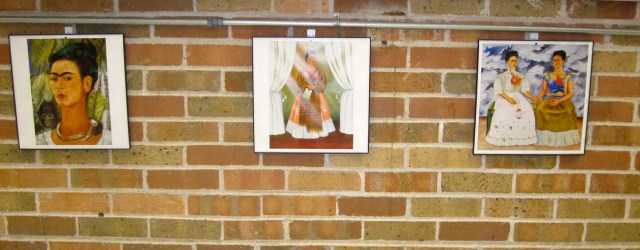
It’s after the holidays and those 12 month calendars are on clearance. How can you use these to make your classroom look a bit more classier? Simple. Follow our steps and turn your classroom into a lovely art gallery.

1. Check your local stores for calendars on clearance. Look for any that feature Hispanic artists such as Frida Kahlo, Diego Rivera, or Gaudí; sites of interests or travel, such as Spain, Machu Picchu, or Teotihuacan; cultural interests such as soccer, or any other calendars that you find that fit the theme of your classroom.
Cut in half to separate the picture from the calendar. You now have 12 pictures to use.
2. Order 12 x 12 frames. Sometimes called “(Record) Album Frames” or “Scrapbooking frames”. There are not very easy to find in most stores, so I recommend searching the web. I bought a pack of 3 from Target.com. You can also try Amazon or other sites.
3. Buy some 3M Command. You can buy them in packs of 3 or 6 and they work great hanging up items in your classroom such as clocks and flags. They stick to most surfaces and come off clean!
4. Hang up your newly framed pictures and see how nicer your classroom looks!

Cheers!

Posted in Bulletin Boards, Culture | Tagged , , , , | 3 Comments

Stocking Stuffers

A few short updates:

-In our post about our clocks, you can see we have labels under each clock representing the country. Although in our classroom, we only have 6 clocks, one for each class period, we have make the country labels for all 20 Spanish Speaking countries. Our new product is a easy way to label your own clocks, use as flashcards for geography, or post around your classroom to get your students accustomed to the Latino countries, flags, and capitals.
20 Country LabelsCurrently priced at four dollars, this makes a great stocking stuffer for yourself or a fellow Spanish teacher.

-We have just added a tremendous link to our Spanish Teaching Sqworl, where you can find numerous links to great resources. Our latest, is an online photo gallery, which tons of great pictures for vocabulary and other thematic units.

-Finally, we would like to reward our customers who have purchased any items from our TeachersPayTeachers.com store starting November 1st, 2011 up until December 24th, and have left feedback on our products. After leaving feedback with a rating, submit your information to receive up to 3 FREE Spanish comic pictures.

A sample of some of the pictures you could receive.

Posted in Culture, Free | Tagged , , , , , | Leave a comment

Connecting to Hispanic Countries

One of my goals for this school year was to include more culture in my class and to have students feel a connection to the Spanish speaking world. One of the first things I did was to have students be able to talk about the time in Spanish speaking countries. It was a great way to review how to tell the time, and this way I could ask more than just the time it was in our school. I got this idea from Señor Noble’s blog. I bought 6 clocks, one for each class I teach. To hang up the clocks, I used Command 3M hanging hooks. I let each class choose a specific country (We had a knockout bracket tournament that students voted between two countries until we had a winner). We had already studied the geography including the capitals of each country.
Under each clock, I posted a strip with the picture of that flag and an outline of the country. I also have posted laminate sentence strips for us to post the weather.

We will be looking up the weather and posting the temperatures in Celsius. I have posted a thermometer poster so students can see how the temperature would relate to Fahrenheit. I want students to begin understanding what Celsius feels like.

My goals for later this year include using Google Earth to take the students on a virtual field trip, having students design a tour of their country by researching attractions, and doing further research on the country.

If you are interested in a Country Research Group Project, I have successfully used this project in the past:

Country Research Project

“Groups will research a Hispanic country in South or Central America. The student project includes a presentation board, map, travel brochure, and flag. Rubric is detailed but this file is a Word file so the buyer can EDIT any part of the project or rubric to their satisfaction.”
Posted in Culture | Tagged , , , , , | 4 Comments

September 11th Segovia Colombia

While this year the talk of the date is the once in a lifetime date of 11-11-11, November 11th holds a “Never Forget” attitude for the people of Colombia.

“La Masacre de Segovia fue una masacre ocurrida el 11 de noviembre de 1988 en el municipio de Segovia (Antioquia) donde fueron asesinadas 43 personas y heridas 45, durante un ataque por parte del grupo Muerte a Revolucionarios del Nordeste, un grupo paramilitar liderado por Fidel Castaño. La masacre se realizó con el motivo de eliminar a los militantes de la Unión Patriótica que habían ganado las elecciones de marzo de 1988.” – Source.

Más Información sobre la Masacre de Segovia:
Masacre de Segovia, Antioquia (Noviembre de 1988)
Wikipedia Español: Masacre de Segovia

Be sure to check the Trending Topics of Colombia tomorrow to see what people are saying. Listen to Juanes’s tribute to these people on his song “Segovia” from his P.A.R.C.E. album
Youtube video of Segovia (with lyrics)

Full lyrics after the jump Continue reading

Posted in Culture | Tagged , , , | Leave a comment

Song for La Casa Vocabulary

As I was sitting thinking about different activities to use for the unit on La Casa in my Spanish 1 class, the song “El Edificio” by Bacilos came up on my music player. What a perfect song! This song has so much vocabulary related to the house unit, along with many cognates, that it is a perfect fit for any unit about La Casa, whether it be in Spanish I, II, or III.

For the full lyrics, see below… Continue reading

Posted in Music, Vocabulary | Tagged , , , , , | Leave a comment

Día de los Muertos

dia-de-los-muertos-lessonsIt’s October, and if you’re a Spanish teacher that means getting ready for Halloween and the Day of the Dead. We’ve compiled some of the best resources around to give you a one stop shop for great teaching materials.

Readings

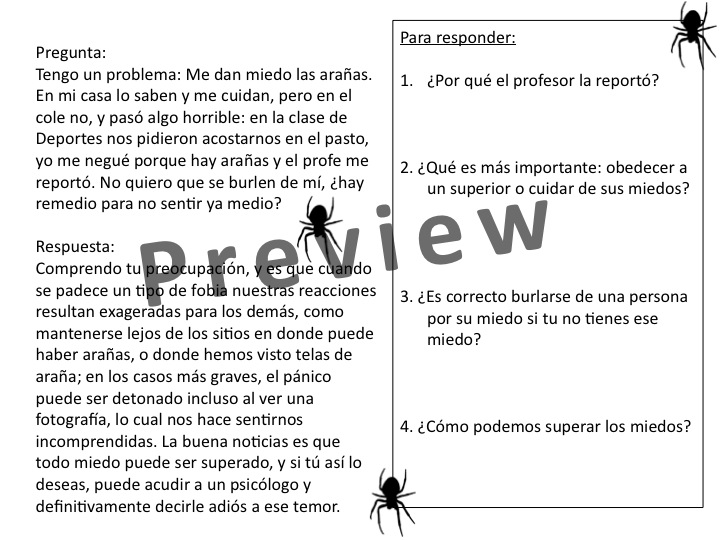
We’ve recently added 2 products featuring excerpts from a Colombian magazine. The first one talks about Hollywood stars such as Justin Beiber and Lady Gaga’s experiences with ghosts. The second one features teen asking questions about their fears with responses from the magazine. Each features questions so you can use print them and use them in your classes right away.

Spanish Halloween Activity Phobias
example:
Miedos Fobias Preview

This twiccionario de Zachary Jones features authentic tweets in Spanish about fears.

tengomiedotuits

Our favorite reading has been this article from Univision that compares Halloween and Day of the Dead titled Calaveras contra calabazas.

This reading is in English, but it discusses Disney’s request to copyright the name “Day of the Dead” which may provoke some interesting discussion in class.

Actividades:
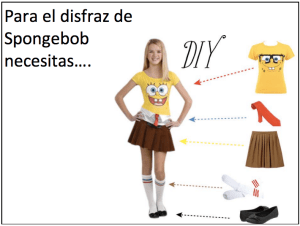
Disfraces Students describe Halloween costumes in SpanishWe practiced Clothing Vocabulary as we talked about Costumes. Students had to describe what clothing made up each costume. You can download a free powerpoint of 12 Halloween Disfraces and then have students make up their own to describe to the class. For upper levels, you could even make up a game by having students guess what the costume is.

Chistes Graficos e Imagenes:
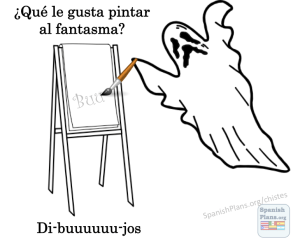
Dibuuuujo joke

The blog Confesiones y Realidades has composed a post of 15 comics including the one to

terapia para zombis

the right.

Day of the Dead Galleries: Look at pictures taken in Mexican cemeteries as people practice the traditions of Día de los Muertos.

2 Infographics, including one which compares Day of the Dead with Halloween.

Videos:

Día de los Muertos video from misCositas.com (Download the script of this video).
Muertos Vivientes

Links:

Language Teachers’ Cafe blog has a post of 5 Ways to Celebrate Día de los Muertos.

The blog Teaching Spanish w/ Comprehensible Input has a list of 23+ Activities for Halloween and Day of the Dead.

*********************
^Article from univision.com “Calaveras contra calabazas“. This article discusses how Día de los Muertos is being overshadowed by the North American celebration of Halloween, especially in the younger generations. The 3 page article is definitely manageable for all levels of Spanish. Although upper levels would have an easier time with it, I plan on having my level 1 students read it and look for cognates and read for context.

^Day of the Dead Galleries: Look at pictures taken in Mexican cemeteries as people practice the traditions of Día de los Muertos.

^Make your own sugar skulls: Follow this recipe and learn about making las calveritas.
^Make your own pan de muerto: Follow this receipe to make your own “dead bread”.

How will you celebrate “Día de los Muertos” in your class? Please post a comment below with your lesson for the day or any other resources you wish to share!

Posted in Culture, Resources | Tagged , , , , , | 3 Comments

Family Tree Spanish

I think we can all agree that the textbooks’ family trees are as engaging as an 8 a.m. lecture in a lecture hall of thousands. After a few years of using my own personal family to teach the family vocabulary words, I’ve instead started to use families that the students are somewhat familiar with (although I refuse to do the Kardashian family).

The Simpsons is one of those shows that includes a nuclear and extended family with enough people to fill out all the vocabulary words. Take a look at the following picture (blank and filled in).

LosSimpsonFamilia

Click to view/download

Pin It

LaFamiliaSimpsons

Click to view

After the jump, check out our Modern Family Family Tree based on the hit ABC sitcom Modern Family and other family related projects and lessons….

Continue reading

Posted in Lesson Plans, Resources | Tagged , , , | 1 Comment

Free Spanish Worksheets

Among our hundred of products, are also many free items. In addition to these completely free worksheets and materials, a majority of our priced items include a free preview for you to get a sense of the product to see if it would be beneficial for your class. All you need is a free login to be able to download hundreds of materials for your Spanish class.

Our Free Products:
*Telling Time : Notes and Quiz – Short 2 pages document. 1 page describing how to state the time in Spanish and another page a brief quiz.
*Teaching Location in Spanish with Magnets – Explains how to use a magnet board to teach prepositions of location. To learn more about this activity and how to use it, read our explanation.
*Chores Vocabulary student oral activity – 20 questions for students to ask each other regarding chores and what they have to do around the house. Students ask the question orally and write down the names of their classmates according to their responses.
*Preterite of AR Verbs Guided Notes Packet -4 pages explaining the use of preterite and the forms for -AR verbs, including the forms for -Car, -Gar, -Zar verbs. Answer sheet also included. Preterito ARMakes understanding the preterite so much easier for the students. One you download these, you will definitely want to check out our -ER/IR packet for the preterite for only $4.00. Not convinced, just download the free preview (‘Download Preview’ button for free sample is always below the price on the product’s page).

While you are at it, I highly recommend checking out the free previews on our top sellers to see if the product is worth your money. The time it will save you in planning alone will be worth every penny. And because our products are classroom-tested and teacher-created, we’ve cut out the middle-man of big publishing companies and bring the worksheets and lessons right to you at a very affordable price!

*Preterite Pack: El preterito
*15 Spanish 1 Projects
*Subject Pronoun Unit
*Conversation Cards Levels 1 & 2 -Oral Speaking Activity

Posted in Free, Resources | Tagged | Leave a comment