Jesse y Joy

One of my favorite Latin artists to listen to, Jesse & Joy, brother and sister duo from México City, are a hit with my Spanish students. Their music is extremely catchy and very easy to understand, especially for beginning level students. I like to play music at the beginning of class as students come into the room work on their bell work.

Check out their website jesseyjoy.com for more information.

Their first album, Esta es mi Vida, features such hits as Espacio Sideral, Esta es mi Vida, Llegaste tú, and my favorite, Volveré.

Volar como lo hace Superman

Their second album, Electricidad, features hits Si te vas, Electricidad, Chocolate, Adiós, and many more!

And good news, their first single, “Me Voy” from their new album is expected to come out late June 2011 September 5th, 2011 and their new album “¿Con quién se queda el perro?” near the end of October!

My students love the creative music video for Chocolate, and apparently almost 2 million youtube viewers agree.
Jesse y Joy ChocolateUsing wordle, I have created a word cloud, using their lyrics from the album Electricidad. The bigger the words are, the more times they appear. Here is the result:

Jesse y Joy

For another wordle and an activity involving J+J for your Spanish class: Continue reading

Posted in Music | Tagged , , | 1 Comment

Mana Drama y Luz

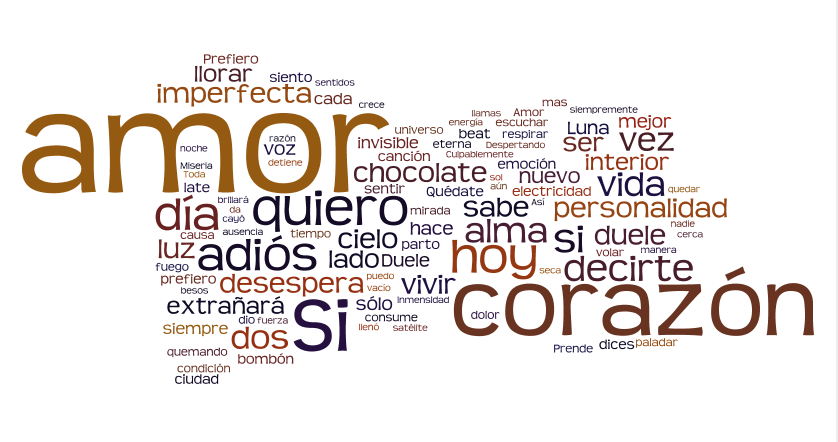
I took the lyrics from Maná’s new album “Drama y Luz” and created a wordle. If you’ve never used wordle before, you can paste in text and it creates a word cloud of the most common words. You can have it ignore the most common words in the language (Hence why you don’t see subject pronouns, prepositions, articles, and other simple words that you would hear in the actual lyrics.

As you can see, the theme of the album seems to be on AMOR. Since it appears as the largest text, it is the most frequent word on the album. CORAZÓN and DOLOR are also frequent themes in the songs.

Wordle: Drama y Luz

For more information on Maná, and their upcoming tour, see their official website. Continue reading

Posted in Music | Tagged , , , , | 1 Comment

Partes del Cuerpo actividad

Teaching Body Parts in Spanish Class:

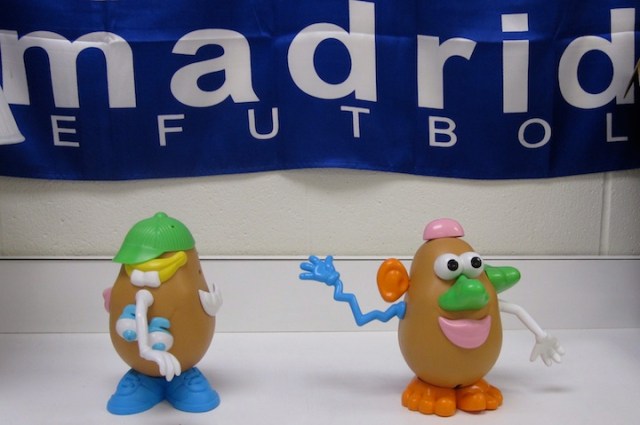
It’s getting that time of the year: Garage Sales. As a teacher, garage sales are a great opportunity to find cheap items that you can incorporate into your classroom. Today’s idea features the classic toy Mr. Potato Head. I found 2 Mr. Potato Heads in a plastic bag for 50 cents each. Go to a retail store and you’ll pay between $8 and $30. So how can we incorporate this childhood toy into our Spanish class?

A day or two after introducing body part vocabulary, as students enter the room, I hand them a Mr. Potato body piece. I then take out the “body” of the potato and place it on a desk in the front of the room. I then proceed to ask questions, such as “¿Quién tiene los ojos?” or “Quién tiene una oreja?” As students raise their hand, I direct them to put it on the potato. “Pon el brazo en la papa” or “Ponlo en la papa” using commands and direct object pronouns.

As you can see, I let the students put it wherever they want. We then vote on their favorite or “el más guapo”.

For more pictures and other Lessons for los Partes del Cuerpo…

Continue reading

Posted in Lesson Plans | Tagged , , , , , | 2 Comments

Make reflexive Verbs fun

When I studied Spanish in high school, I never quite understood the concept of reflexive verbs. Now, as a teacher, its one of my favorite topics to teach! Make teaching reflexives verbs fun, interesting, and engaging for your students.

I show my students the Solecitos video clip of “Sr. Cepillo“, a video about brushing your teeth: (Hay que cuidarse los dientes… lávate los dientes por lo menos dos veces al día)

At first the students think its a bit strange. By the fourth time, they are getting the song stuck in their head. The next day, I play the video again, but this time, I have my own “Señor Cepillo” that I use to mimick the motion of the video. The kids all want to use it!
All you need to do is take a yard stick, cover it in construction paper, and then cut another sheet of construction paper into strips for the brushes. The result:
Senor CepilloFor more ideas on teaching los verbos reflexivos, keep reading… Continue reading
Posted in Discussion/Methodology | 3 Comments

5 Things You Didn’t know about 5 de Mayo

5 Things you Didn’t know about Cinco de Mayo:

1: When: May 5th, 1862. Unlike Independence Day, celebrated September 15 and 16th, which is the largest national celebration, Cinco de Mayo is only celebrated regionally and in fact, is celebrated more in the United States than it is in Mexico.

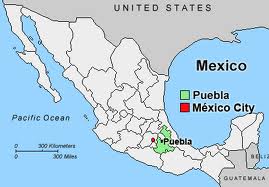
America's Holiday2. Where: Puebla, Mexico, 130 kilometers (81 miles) east of Mexico City.

3: What: One particular battle in which a small, local group of Mexicans were able to defeat the well-trained and well-equipped French army, despite being outnumbered. Estimates range from a 500 to a 2,500 difference with the Mexican contingent being around 4,500 men. This David v. Goliath victory was a rallying point for Mexican Unity and national pride. However, in the end, French won the war and occupied Mexico for 4 years with Napoleon’s appointing his relative Maximilian as ruler, until he was later overthrown and executed.

4: Why: The French invaded Mexico since Mexico was unable to repay its debt to France, who was looking to expand its empire. While the United States certainly did not want France to occupy the land to our south, Lincoln was a little bit occupied with our own Civil War.

5. It is not a national holiday in Mexico. Most Mexicans do not celebrate 5 de Mayo. However, commercial interests have long promoted it in the United States with Mexican food and beverages.

sources: http://www.mexonline.com/cinco-de-mayo.htm
Posted in Culture, History | Tagged , , | 5 Comments

Cinco de Mayo

Oh great, it’s that time of year again. The one day a year Americans pay attention to the Mexican “culture”. It’s the one date your average American can say in Spanish. (Although I’m sure we’ve all had that student who has asked what day is Cinco de Mayo!) But why May 5? Why is this the holiday that seems to be the focus of all Spanish classrooms? Have you ever looked through a foreign language catalog? Count the number of products featuring 5 de Mayo. It will undoubtedly outrank any other cultural aspect of any country. Go to a party store. Guaranteed you’ll find a section with “Cinco de Mayo” decorations.5 de mayo celebrations

But why? What is Cinco de Mayo? To learn of its historical significance, I suggest reading this page, and recommend sharing it with your students.

Before we look at what it is, lets talk about what it is NOT:
It is not Mexican Independence Day. Repeat, it is NOT Mexican Independence Day. If there is just one thing that my students remember from my class, I hope it is this piece of information. I know that if they don’t continue to study Spanish, that in 15 years, they may not remember what a “reflexive verb” is, or what “-ar preterite endings” are, but if they can spread the message of what 5 de Mayo actually is, then I will feel successful.

Yes, students commonly mistake this holiday for Mexican Independence Day. And why wouldn’t they? How many products do you see being sold for that “holiday”? How many Spanish classes have a “party” on September 15? (“It’s too early in the year for a party”) Now compare that number to the number of celebrations that take place in Spanish classes for May 5th. (“It’s almost the end of the year!”) I’m not slamming those who do celebrate this holiday, but comparing the attention it receives in relation to actual important events in Mexican history.

I believe that Spanish teachers are perpetuating ignorance by insisting on having celebrations on Cinco de Mayo instead of actually informing students. What do students remember? Parties, Celebrations, fun, food, fiestas! “Well, we had a party in Spanish class, so it must be Independence Day” When the focus is food rather than information, students lose focus.

Fact is, Cinco de Mayo is not even celebrated throughout Mexico. It is celebrated more in the U.S. than it is in Mexico. Yes, Cinco de Mayo has its regional historical significance. Yes, it continues to be celebrated in the town of Puebla, Mexico. Outside of Puebla, no one in Mexico celebrates Cinco de Mayo. It is not a national holiday. However, it is marketed by companies to sell products to Americans. People who know nothing at all about its history are the first to the bar and Mexican restaurants to consume Corona, tequila, tacos, and quesadillas. Actually talk to someone from Mexico and you will get a complete different perspective on this “holiday”.

This day is not even one of the major Mexican holidays. Clearly the celebrations of Independence September 15 and 16th are at the top of the list. And after that you have November 20th (Día de la Revolución), February 5th (Día de la Constitución), and March 21 (Día del Natalicio de Benito Juárez). But I guess el quince de septiembre, veinte de noviembre, cinco de febrero, and veintiuno de marzo are not as easy for English speakers to say when they are un poco tomado.

One of the best analogies I have heard about the foolishness of making a big deal of Cinco de Mayo comes from a former colleague of mine, who was born and raised in Mexico City:
Americans celebrating Cinco de Mayo is like Mexicans celebrating a battle that the South won in the Civil War, a war which they lost.

It’s your turn. Comment below with your reactions. Do you celebrate Cinco de Mayo in your class? Do you celebrate other Mexican holidays in a similar fashion? If you asked your students, would they be able to accurately tell you what 5 de mayo is? What are your plans this year for May 5th?

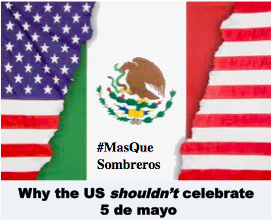
America's Holiday

Posted in Culture, Discussion/Methodology, History | Tagged | 31 Comments

Expresate Spanish Resources

Expresate Chapter 1
Subject Pronouns Practice on Powerpoint
Teaching Subject Pronouns (5 pages)
Teaching Subject Pronouns with Pictures
Telling Time : Notes and Quiz (FREE)

Expresate Chapter 2

Expresate Chapter 2 Test (Adjectives, Gustar)
Ser Adjectives Flashcards

Expresate Chapter 3
Expresate Chapter 3 Test (gustar, ir, jugar, ar verbs) and Review

Expresate Chapter 4
Expresate Chapter 4 Files- 19 Documents, Worksheets
Expresate Chapter 4 Test and Review Game
Getting students to practice vocabulary

Expresate Chapter 5
Expresate Chapter 5 Files- 20 Documents, Worksheets
Expresate Chapter 5 QUIZZES (vocab and grammar) family/house/chores
Spanish Location words: Prepositions, preposiciones Interactive Lesson
Family Familia Album / Book Project W/ RUBRIC
Guess Who? Game Clue sheet for students
Chores Vocabulary student oral activity Spanish
Tocar Worksheet and Parecer Worksheet
Facebook Myspace Profile Description Project

Expresate Chapter 6
Expresate Chapter 6 Files – Documents, Worksheets
Expresate Chapter 6 Food Vocab Presentation
Expresate Chapter 6 Test, Review Game, Study Guide
Food Vocabulary Unit for Spanish: Worksheets, Quiz
Food Project (Level 1) with Rubric
Spanish Food Oral Partner Speaking Listening Activity Comida
Spanish Food Vocab Bingo
Ser and Estar Unit Lesson Plan Packet: Spanish (19 pages) (pdf)
Ser and Estar Unit Lesson Plan Packet: Spanish (19 pages) Editable (.doc)
Affirmative Informal Commands Powerpoint Notes
Ser Estar Practice Review Powerpoint Whiteboard
Ser Estar study sheet cheat sheet BOOKMARKS
Commands and Direct Object Pronoun Practice Powerpoint
Direct Object Pronoun Notes and Practice Spanish Worksheet
Direct Object Pronoun Practice Spanish

Expresate Chapter 7
Expresate Chapter 7 Test, Review Packet (with answers)
Spanish Body Parts Drawing for Listening
Spanish Body Parts Project and Presentation
Body Parts Spanish Memory Game
Reflexive Verb Unit Lesson Plan Packet
Reflexive Verbs Guided Notes packet
Doctor Skit (Projecto de Salud) with Rubric for Spanish
Dear Abbey Asking and Giving Advice Project
Positive and Negative Informal Commands Practice
Tener Expressions + Feelings and Estar and adjectives (answers included)

Expresate Chapter 8 and Chapter 9
Clothing Shopping Spanish Unit
Corte Ingles Clothing Webquest
Preterite of AR Verbs
Preterite of -IR, -ER verbs
Preterite Spanish Powerpoint Past Tense
Preterite and Informal Commands Application Worksheet
Preterite Canciones Songs for Past Tense Spanish
Preterite Pack: El preterito– All the above files plus more for one low price!

Chapter 8:
La Ropa : Clothing Unit pack

If you are looking for Worksheets and Assessments for ALL of Level 1, look no further Expresate Level 1 File Pack 23 MB – Check out the free preview to see all that is included in this Mega-pack.

Spanish Level II:
Spanish Conversation Cards Level II – Oral Speaking Activity  Our most popular item now expands to level two, with 28 pages of questions to get your students responding to questions. Divided into 15 common topics and themes from level 2 classes.

To be alerted of new products, follow me and you will receive an e-mail when new items have been posted: http://www.teacherspayteachers.com/Sellers-Im-Following/Add/Spanishplans

Other Resources:
Spanish Verbs Word Wall Bulletin: Make a word wall using the verbs from Expresate
Spanish Speaking Country Research Project: Have students research a Hispanic country
Latino America: Central and South America Country Capital Quiz:
Geography quiz
Spanish I Resource Book of Worksheets: The BEST collection of all our items
Spanish Conversation Cards – Oral Speaking Activity: Makes a great emergency lesson plan or for when you have a few minutes left at the end of class
Spanish Bell ringers: Our most popular product
Pronunciation Assessment / Oral Speaking Test: Focus on pronunciation of vowels and syllables
Free Animales Unit Spanish: Students love this lesson!

For an updated list click the “Our Products“.

Posted in Expresate textbook, Resources | Tagged , , , , | Leave a comment

Past Tense

I remember hearing that over 85% of communication in a language is in the past tense. Yet, we as language teachers, generally wait until second year to fully engage our students in past tense. Ideally, we should be introducing and exposing students to past tense throughout the whole year. If you are a TPRS teacher, we surely can incorporate past tense into our teaching without teaching the specific endings. For those more traditional teachers, we seem to wait until the end of level 1, as textbooks dictate, before introducing past tense.

I like to first introduce my students to the verb “ir” in the past tense by asking about their weekends when we start class on Monday. The question “Adónde fuiste este fin de semana” with a response of “Yo fui a….” every Monday has students talking about where they went, without even realizing they are using a different tense. (Although explaining that “Yo fui a mi casa” is not a valid response may take some more time 😉 )

So here are our products that feature the El Pretérito, the Spanish Preterite (I just can’t spell it Preterit):

FREE Spanish Preterite Lesson: Preterite of AR Verbs:
See why over 300 people have downloaded this packet. The introduction to the preterite tense explains the difference from present tense to past tense and builds on prior learning. Focuses on the endings of -AR verbs in the preterite and explains -Car, -Gar, -Zar verbs.

Preterite of -IR, -ER verbs
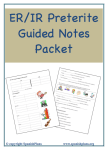
Preterite of ER verbs IR VersIf you liked the -AR packet, this one is next in line. 6 page packet reviews -AR verbs in past tense and shows differences between present and past of -ER, and -IR verbs highlighting the difference between “boot” verbs and “flip-flip” verbs. Gives conjugation practice and practice choosing the correct verb for a specific sentence. Includes answers and an alternate packet without flip-flop verbs to keep it simple. Total of 13 pages!

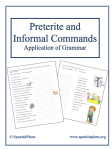
Preterite and Informal Commands Application Worksheet
2 pages to practice with the Spanish past tense of el preterito
Practices using Informal Tú Commands (Positive and Negative)/ Mandatos (Afirmativos y Negativos)
Preterite WorksheetFirst page: Write a command, telling someone what to do or not to do, based on something that they DID. (20 sentences) Second page: Write what someone did based on what someone is telling them not to do. (14 sentences)
Involves higher level thinking as students are responding to something in the target language and their is no one single answer; they can answer in a variety of ways.

Preterite Spanish Powerpoint Past Tense:
A Powerpoint presentation of 8 slides for student to practice el preterito.
Can be used as Bell Ringer, Class Activity, Exit Slip, or just review.Powerpoint preterit
Presentation includes the answers, just click space bar to begin.

Preterite Canciones Songs for Past Tense Spanish
4 authentic Spanish songs that feature forms of the preterite tense.  Includes links to the official video and complete lyrics. Cloze activity (fill in the blanks listening activity) lyric Canciones Preteritosheet included for one of the songs.
Bonus song also included that is a ‘prequel’ to one of the past tense songs.
Featured songs by: Juanes, Maná, Camila, and Nelly Furtado.
Don’t have YouTube access at school to show the videos? Don’t worry. Instructions included on how to download videos from YouTube and save them to your computer.

Preterite Pack:

Get all of these:PreteritePack
-AR Past Tense Notes Packet (4 pages + answers)*
-ER/IR Past Tense Notes Packet (6 pages + answers)*
-Worksheet on choosing the correct verb and conjugating it based on the sentences (includes answers)
-Powerpoint of Bell Ringers or Class Activities
-Double Sided Worksheet using informal postive and negative commands with past tense*
-Past Tense songs (4 songs using el preterito)*
-Worksheet on IR in past tense
-2 Quizzes
-Timeline project

*Files in BOTH PDF and Word, making it capable to edit the files to more directly fit your own classroom’s need

So, do you spell it Preterite or Preterit?

Posted in Lesson Plans, Resources | Tagged , , | Leave a comment

Updates

Just a few quick notes. On Wednesdays we will be posting a link on our twitter (@spanishplans) whether it be a web2.0 tool, cool Spanish sites, education sites, or other sites of interests to educators.

Our previous two:
Wed, March 16:  http://capl.washjeff.edu/index.php Culturally Authentic Pictorial Lexicon: images for language learning
Wed, March 9:  Our first website includes games and activities in Spanish: http://www.hello-world.com/Spanish/index.php

***Updated: All links to these websites are now featured on our sqworl.

TeachersPayTeachers Updates: We posted two new products utilizing songs in your Spanish class. One I used for a 4 day week as Bell Ringer cloze listening activity. The other one has 4 songs that feature preterite form verbs.

Canciones Songs for Spanish Bell Work
Features songs by Jesse & Joy and Juanes. Includes complete lyrics and cloze lyrics and also a list of cognates. Also links to the official music videos.

Preterite Canciones Songs for Past Tense Spanish
4 songs: Juanes, Maná, Camila, Nelly Furtado
Includes full lyrics.
Forms of past tense in songs include:
se lanzó, llegó, se conectó, contó, regresó, se quedó, mató, enterró, enseñó, prometió, tracionó, tronaron, fue, encontró, desapareció, amó, creció, abandonó, maltrató, fue, preguntó, negó, dio, lastimó, escuchó, quiso, olvidó, llevó, se apagó, lloró, cambió, vi, me convertí, fue, fui, tembló, escribió, pasó, sentí, me sorprendió, estuve, tuve, di, fue, me sentí, vi, busqué, encontré, llegaste, sangró, perdí

Posted in Web2.0 Technology | Tagged , , , | Leave a comment

Comics

We talked about creating comics and cartoons about a month ago, and we are back with some more ideas and new sites.

Did you know that creating comics is one way to differentiate in your classroom? Differentiated instruction can be in the form of choices and regards for multiple intelligences. Having students work on cartoons fits both categories as you are adhering to the visual/spatial intelligence and logical/mathematical intelligence. You can also allow students to have choice with these activities. You may give them a number of different comics to choose from and they pick a certain number of those to complete.

Our newest comic creation website is called Make Beliefs, a free comic strip creation tool that provides students with a variety of templates, characters, and prompts for building their own comic strips. The site provides students with a pre-drawn characters and dialogue boxes which they can insert into each box of their comic strip. The editing options allow users the flexibility to alter the size of each character and also their emotions.

comiccreator

Sample Comic from MakeBeliefsComix.com

The nice thing is that they are black and white outline and make quality copies on the copy machine. You can even have your students color them in themselves.

The following samples were created from ToonDoo and I let me students finish the already started comics.

ToondooSpanish

Or let the student create the whole comic strip:

These make ok copies as well, although you can decide if you want to add background and other items (there are soooo many items to add in!)

Some ideas for students to draw with their comics are to:
-Introducing someone
-Asking someone about their plans
-Declining an invitation, making an excuse
-Talking about food
-Telling a sibling what to do
-Talking about likes and dislikes
-Describing what you did on vacation

As you can see, these activities can be used in Level 1 and go all the way through Level 4 and above in any foreign language class.

Posted in Projects, Web2.0 Technology | Tagged , , | 1 Comment