Check out our new About us page with an overview of our website, including how to connect with us on social media, our top blog posts, our top products, and some free resources.
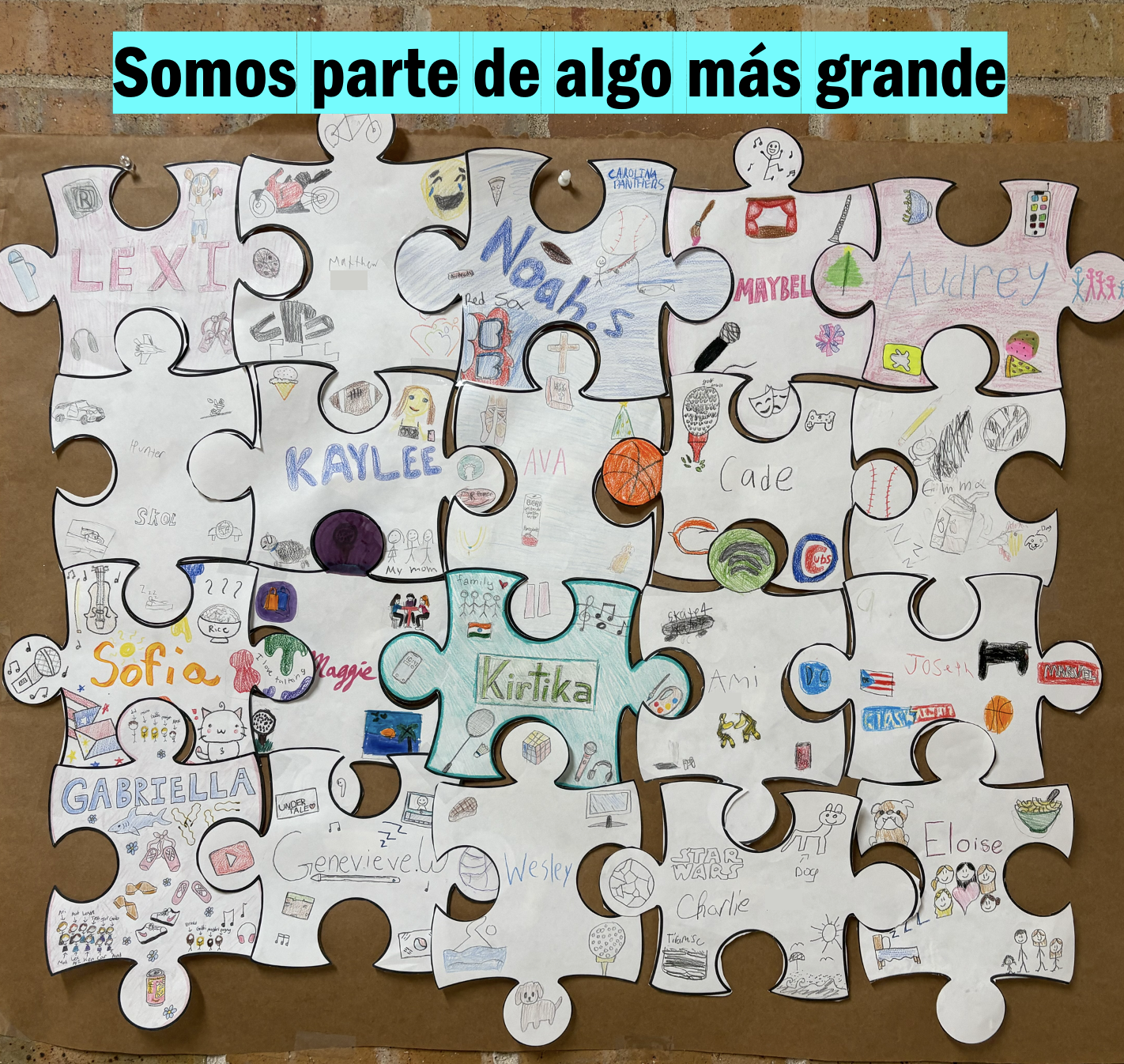
At the 2025 Illinois Council on the Teaching of Foreign Languages (ICTFL) fall conference, I attended a session by Rachel D’Onofrio and Curt Gladstein from Evanston Township High School. Their session called “Low Prep Activities to Encourage Student Connection” gave super quick activities to build community with students. The activities could be done in the target language or in English when necessary. One of their activities was a puzzle piece where students fill out a puzzle piece with information about themselves. They could draw things that represent themselves such as what is important to them or what they like to do. Once their visual is complete, they present it to a small group.
One aspect I appreciated was a handout that allowed students to record what they learned about the presenter and identify what they have in common. Whether completed in writing or used to guide a discussion, this activity supports community-building by helping classmates learn about one another. It encourages students not only to recognize individual uniqueness but also to notice shared experiences and interests.
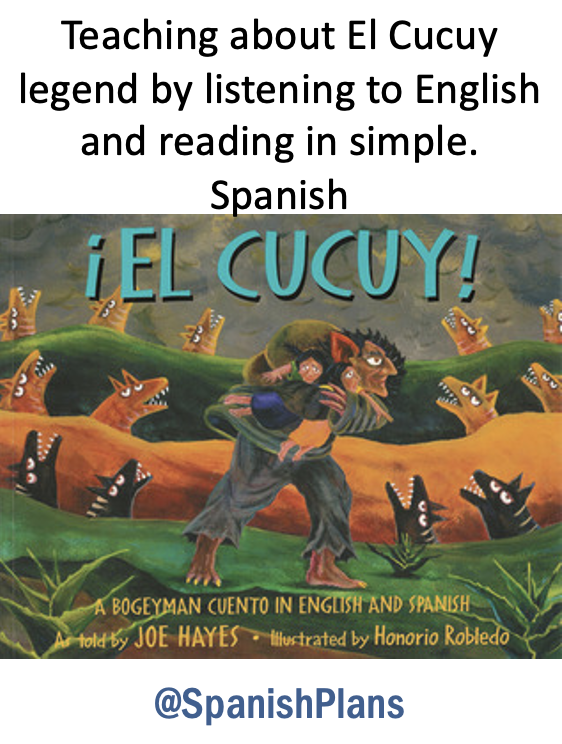
Looking for a novel way to teach about the legend of El Cucuy, but don’t want to do the traditional activities of CI? I had to think about how I could get my students to be familiar with the story and be able to provided super simple Spanish input. A book by Joe Hayes was the answer.
This is an activity I did years ago and always thought I blogged about it, but never did… until now.
This year was my first year using the book LA LUCHA by Melisa Lopez from FluencyMatters/Wayside Publishing. The book is a historical fiction book about a teenager year old named Javier who works in the fields picking crops alongside his dad. Javier hears about a movement lead by Cesar Chavez and wants to join, despite his father’s objection. It’s a great book that brings in our US history of the Farmworker’s Movement, and the work of Chavez. It is written in the past tense, and is probably ideal for 2nd or even 3rd year students. I managed to use it with my 8th graders in their second year of level 1. The teacher’s guide was super helpful as well. Here are some other resources that I used during the novel:
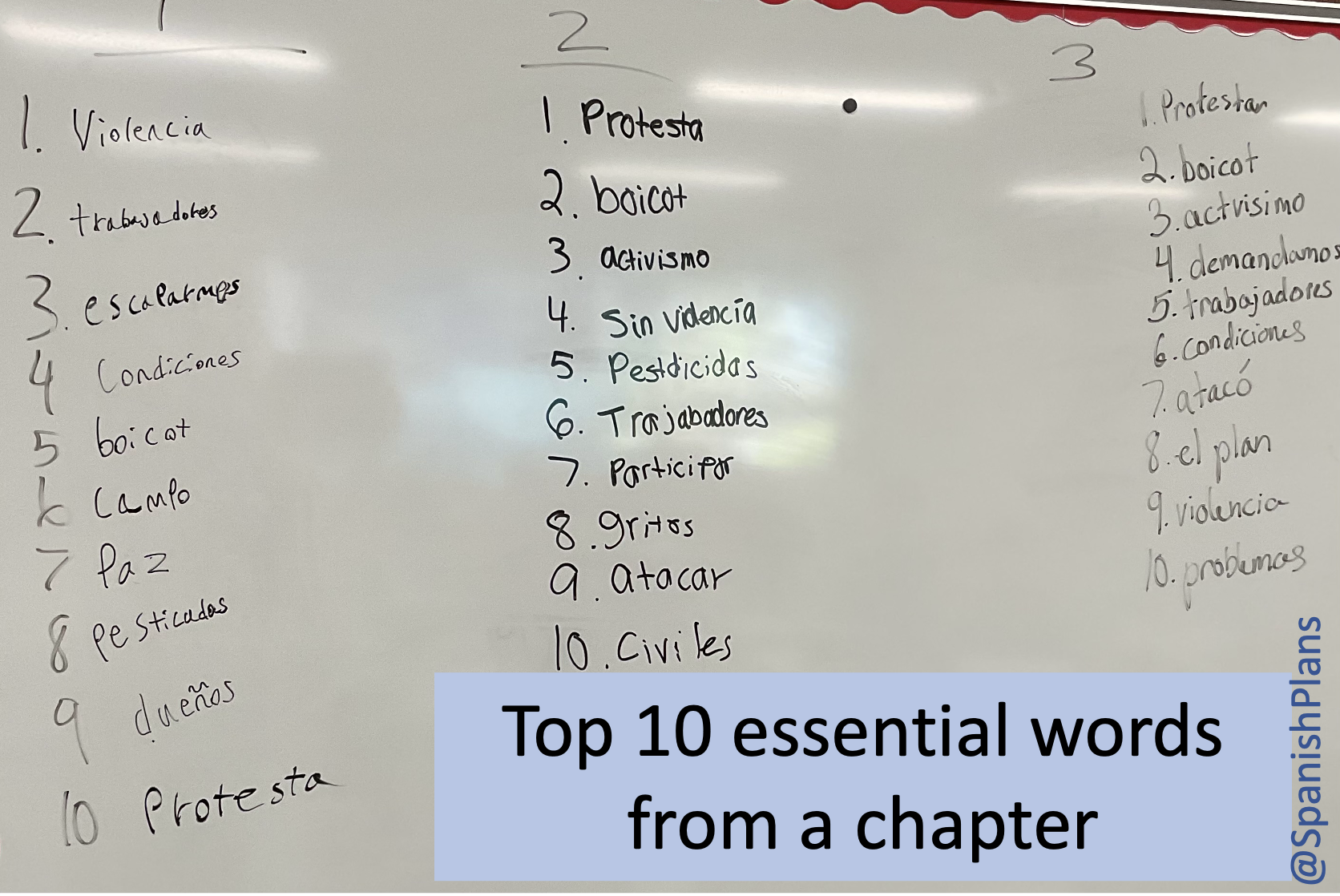
If you are reading a novel in your Spanish class, we’ve got a new activity that you may want to try. My 8th-grade class is currently reading “La Lucha” by Melisa Lopez. After reading chapter 6, I had students take out a piece of paper and review the chapter and come up with a list of 20 words they felt were most representative or most important to the events of the chapter. It had to be individual words or small phrases of 1-3 words, words that shouldn’t be separated. After they had their own list, I had them work with a partner and share lists. If a word appeared on each partners’ list, they would circle that word and see how many words they had in common. Then, I had partners join another group and as a larger group (of 4+) they had to come to a consensus on the top 10 most essential words from the chapter. The discussion about why a word was important or why one word was more important than another was great to hear. (Note: At this level, the discussion was happening in L1).
Each group then wrote their final 10 words up on the board, and we compared them all. I asked groups if they wanted to make any changes to their lists now that they had seen other groups’ list. Groups debated on whether to stick with their lists or to swap a word out for another.
By having them make their own list, they had to go through the chapter again. Anytime you can find ways for a student to look at a text more than once is a win. They also needed to know what the words meant in order to determine how important it was. So, if they weren’t using the glossary or reading for comprehension the first time, they would need to do so to come up with their list.
By having them work in pairs, they were able to hear additional words and the partners could discuss in a small setting what the words meant or why they choose that word. The larger group discussion made them really try and evaluate what words were most essential and why.
You could even combine the lists from all classes into a spreadsheet and see what the most chosen words were.
A follow-up to this might be having students write a summary of the chapter using those 10 words their group came up with or write a paragraph using as many words as they can. I even thought about having them use AI to input those 10 words and ask the AI to generate a short story using those words, given the context of the story, and have students read those paragraphs so they get additional input of those terms.
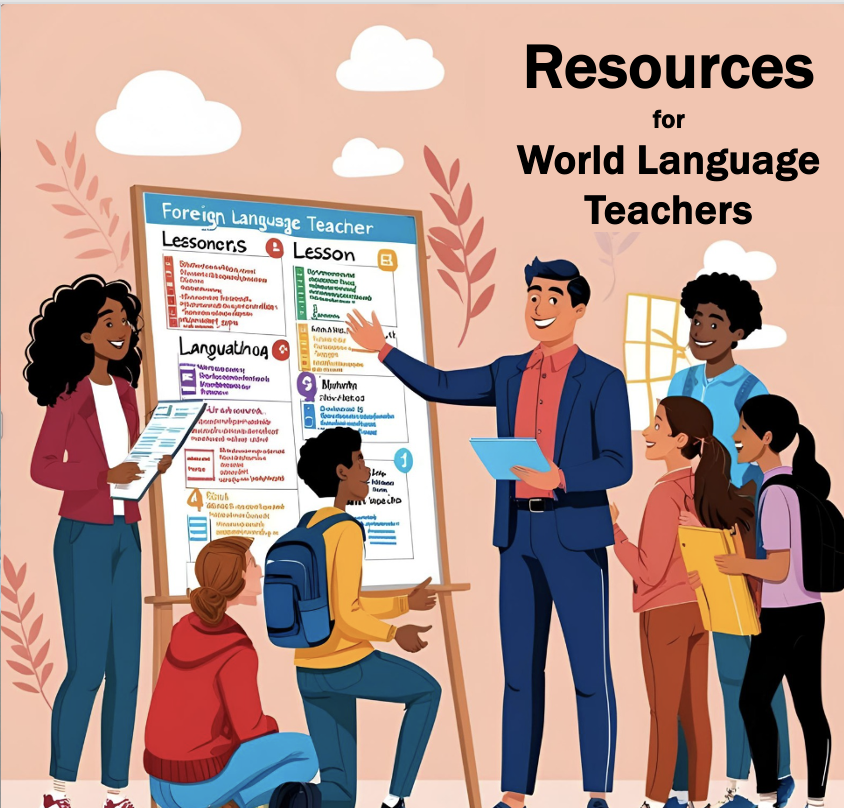
As teachers look ahead for resources to request for the next school year, we are sharing a curated list of Subscriptions services or websites for World Language teachers. The list ranges from curricular resources that are targeted for language acquisition and development in reading, listening, and even some speaking, as well as gaming sites or lesson planning sites using AI.
Check out the List: Resources for Language Classes. If you know of any other sites/services, let us know so we can add it to the list.
We currently have 35 sites. Many sites offer a free trial with some offering a free basic version.
Which have you used? Which are your favorite resources to use as a language teacher?
We are in the last week of MMM, although the polls remain open until the end of the month, and the resources never expire. Check out our Round 2 and beyond Presentation with voting links.
The 1st semifinal went back and forth and less than 40 votes separated them before an official winner was declared. Monday and Tuesday are the final days of the 3rd and 4th quarter with the semifinals kicking off on Wednesday and Thursday and the final this Friday.
This is also the last week of our huge raffle, with tons of huge prizes available!
We’ve just added 2 new entries: Submit an anonymous feedback form and let us know what worked and what improvements should be considered for next year. You can also join a MMM mailing list or volunteer to help choose the songs for 2026.
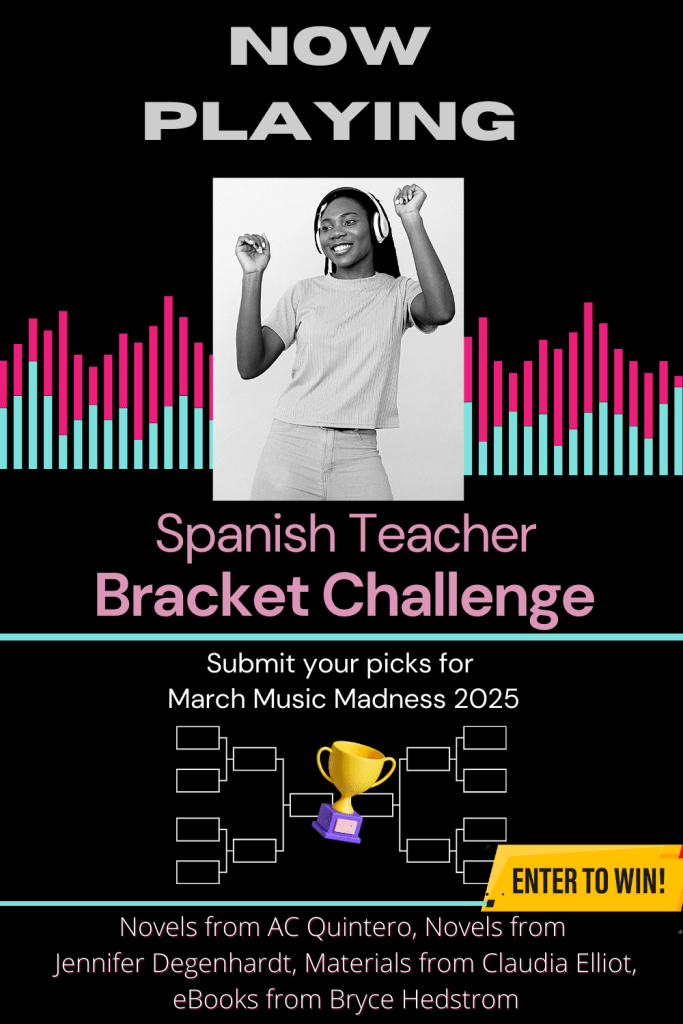
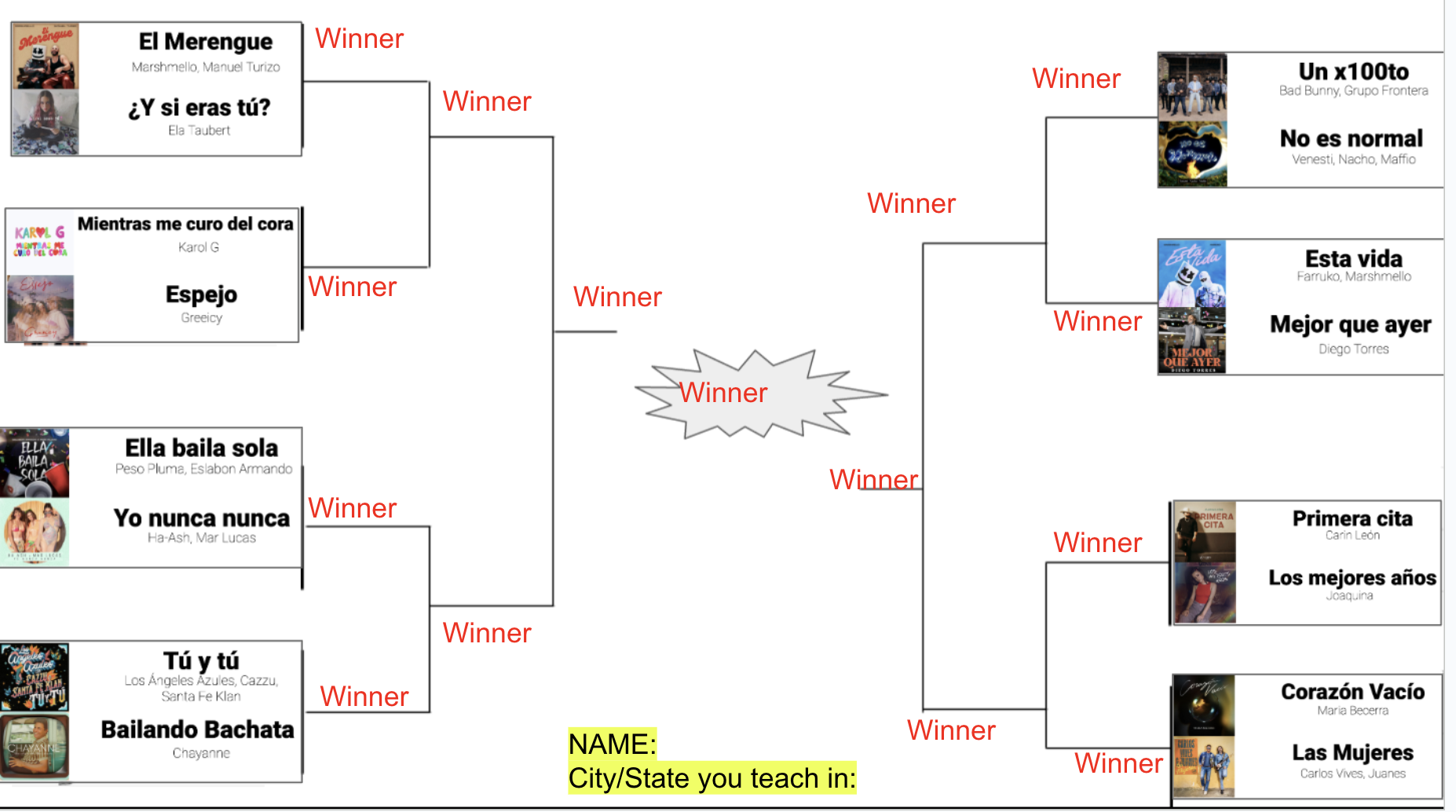
Our March Music Madness is just under a month away and we’ve got some surprises in store. The first is the unveiling of our Teacher Bracket Prediction Challenge. Teachers can fill out a google form with their picks to try and end up with a “perfect bracket”. The teacher(s) with the most points will be winning some high-desired prizes.
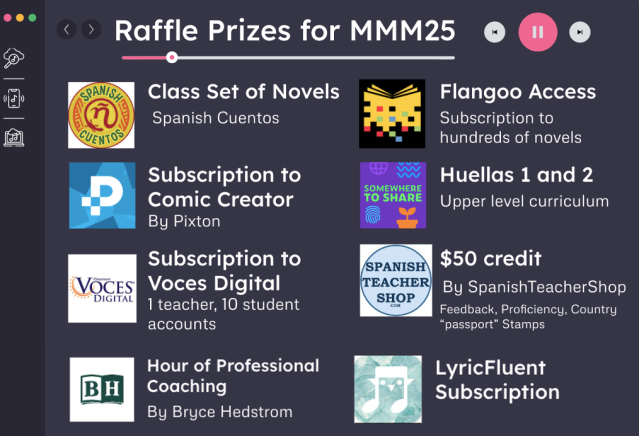
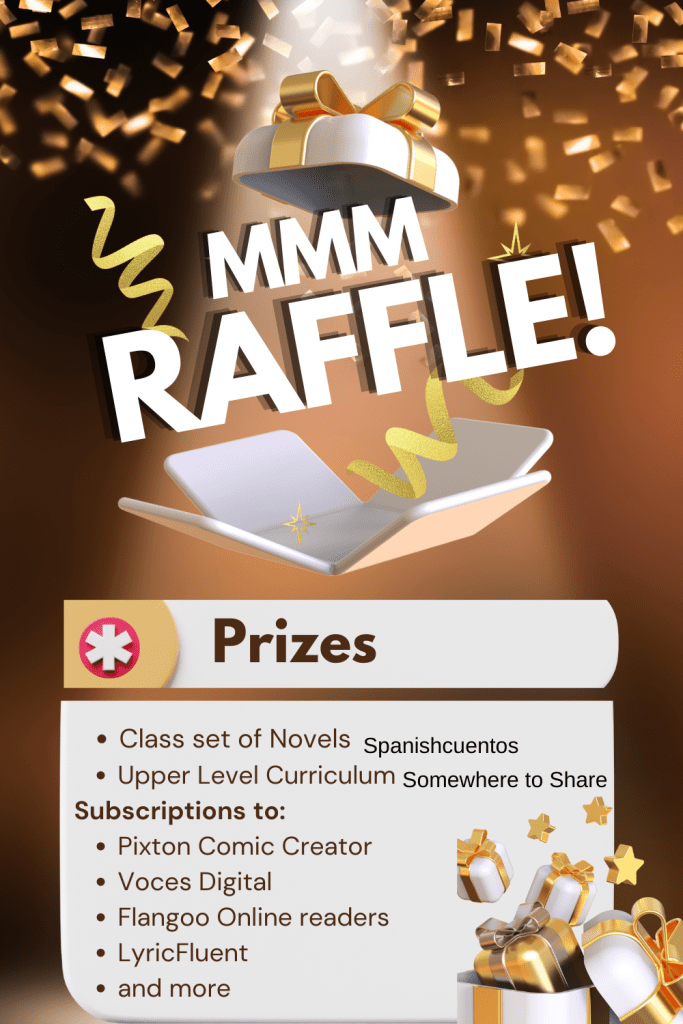
We are also running a Raffle to promote MMM25, with a plethora of dream prizes. The first entry? Submit the prediction bracket mentioned above! You could win a class set of novels from Spanish Cuentos, the entire Huellas curriculum from Somewhere to Share, plus subscriptions from Flangoo, Voces, Pixton Comics, Lyric Fluent, and more!
You can find all the ways to enter on our Raffle Page and see a list of all the prizes.
Check out our promotional video with a preview of all 16 songs below. Don’t forget to check out all the resources in our Shared Google Folder, such as our bulletin board folder. And if you are looking to download what you need now, purchase the unit now. [Purchase not necessary to participate in Raffle or in the tournament]
Good luck in the raffle! Note: Entry 3 and 4 can be done on multiple days for additional entries.
With a toddler and newborn, I haven’t posted as much as I would like the past year. But if there’s one thing that gets me foregoing sleep so I can work on creating… it’s the annual March Music Madness. We are happy to announce that our playlist has been shared and we are gearing up for our 12th bracket tournament.
At the moment, we are having a final vote for the 16th and final song of the bracket. You can vote for your favorite now through January 16 (You can also share this link with your students and have them vote as well). [Edit: Himalaya won with 35% of the vote, narrowly beating Vamo’Echando with 33%)
So, it’s time to get started…. Here’s a quick list to get your started:
Start playing the songs in class while your students work or as they walk in the room. The idea is to let them hear the song a few times so that by March, they say “Hey, I’ve heard this song before…”
Purchase the Unit on TpT, which is now 50% off until February, and will be updated continuously.
Purchase is not required to participate in our bracket or our polls. This year to track downloads, you can download the free “preview” document on the TpT page, which will give you what you need to get started.
Get the word out! Comment on our Facebook posts and in the FB Group and Instagram posts. Increasing engagement ensures that the content gets seem by more teachers. Also, talk to other teachers or comment online about why you love the original SpanishPlans bracket.
Get ready to collaborate. We would love your help in creating any materials. Drop them in the shared Google Drive or reach out if you have any resources that you would be willing to make.
We are less than a week away from March Music Madness 2024. Plenty of time to get in on what will sure to be the highlight of the year for your students. We recently sat down with Claudio Elliot on her podcast Growing with Proficiency to discuss the Music Tournament. One of the key talking points is how we can use music as a way to discuss in the target language, without having to study the lyrics.
Our resource drive is growing and the one thing you won’t want to miss is the Round 1 Matchup Slideshow which has all the links you need and is the perfect thing to project if you listen and discuss in class.
A recently updated document that you’ll want to look at before next Monday is the Teacher Digital Bracket Prediction Document and Google Form, where you can enter to win prizes award to teachers who have the best score. We also offer a version that teachers can copy and send out to their classes, or new this year is a national google form for students to submit their predictions.
Don’t forget to take pictures of your classroom bracket display (Here’s a folder of materials you can use) and post them in the social media thread of our Facebook Group. A randomly selected post will win a prize. You can also help spread the word about this bracket by posting pictures on social media and tagging us, @SpanishPlans.
Still not quite sure how you can use MMM in your classroom? Read the different ways teachers implement it in into their own classes and adapt it to make it fit their schedule and needs.








 SpanishPlans.org