As the year went on, I noticed that my students needed a lot of support with writing. During timed or free-writing activities, many students would write very little because they did not know how to get started or how to write at their current proficiency level. Students often want to write at the level of their native language and then translate their ideas instead of focusing on what they already know how to say in Spanish. Before this lesson, we had already discussed circumlocution and the importance of describing something when we do not know a specific word.
To introduce this activity, I projected an image from an OKstorycards card so we could practice these strategies together as a class.
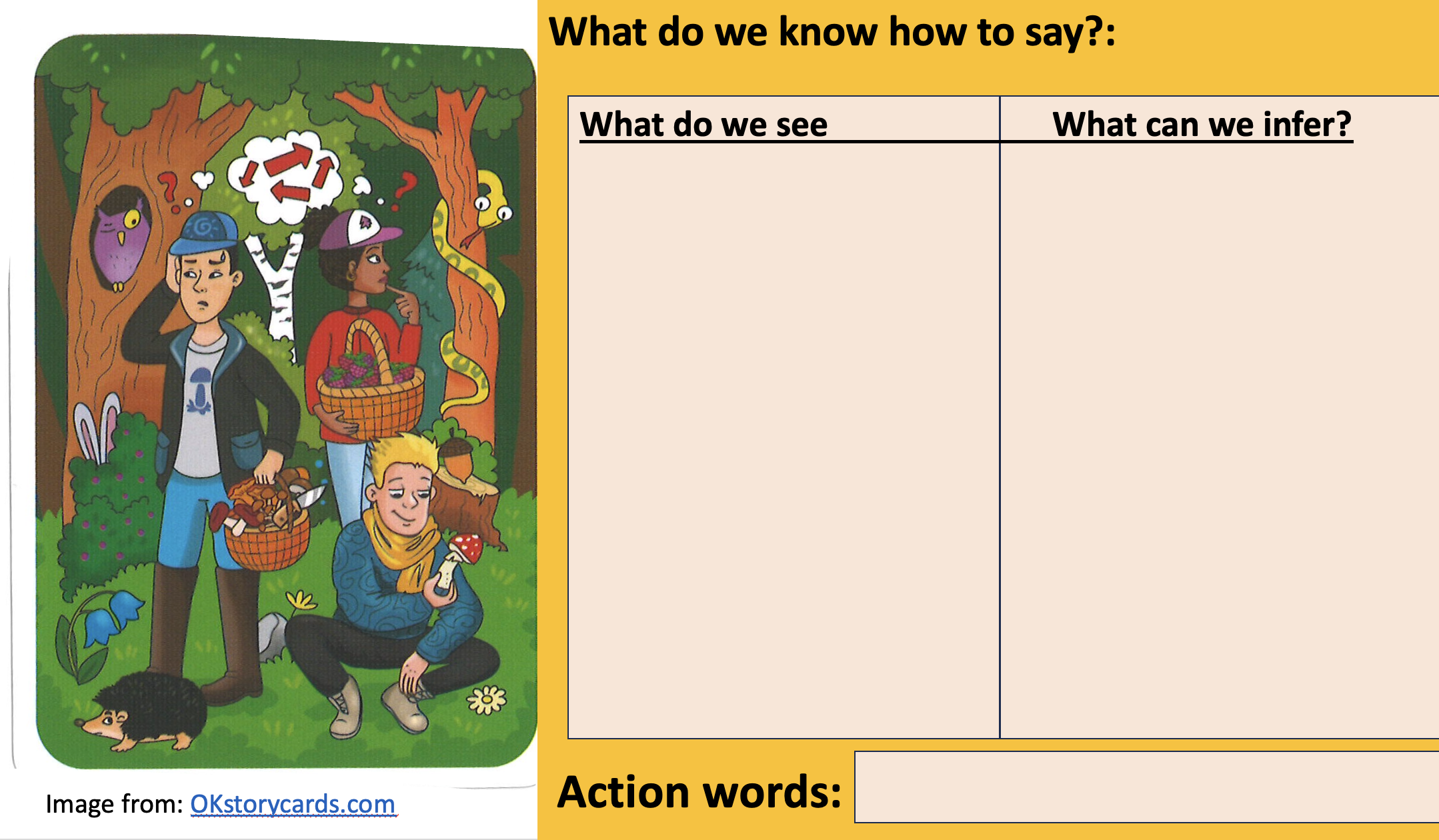
On the first slide, I asked students to look at the image and identify objects they already knew how to say in Spanish. Students might say things like “tres personas,” “animales,” “una flor,” or “un árbol.” They might also list clothing vocabulary they recognize, which I simply group together as “ropa.”
The next step was to make inferences about the image and describe what we could figure out from context clues. Students might identify emotions such as “confundido,” using the question marks above the characters’ heads as evidence. They might also infer that a character is “nervioso” because of the sweat on his forehead.
When students encounter words they do not know but are somewhat important to the story, we discuss how to use circumlocution or substitute a simpler word they already know. For example, instead of saying the people are in a forest, students might use a more familiar word such as “parque.” Instead of “mushroom,” students may suggest words like “planta,” “flor,” or “fruta.” While these words are not exact translations, they are close enough for novice-level learners to communicate meaning successfully.
We also practice describing ideas instead of searching for one perfect vocabulary word. In the case of “being lost,” students can think about the meaning of the phrase rather than the exact word itself. By breaking the idea down into “not knowing where you are,” students can arrive at a phrase such as “no saben dónde están.” This helps students realize that communication is still possible even when they do not know every word they want to use.
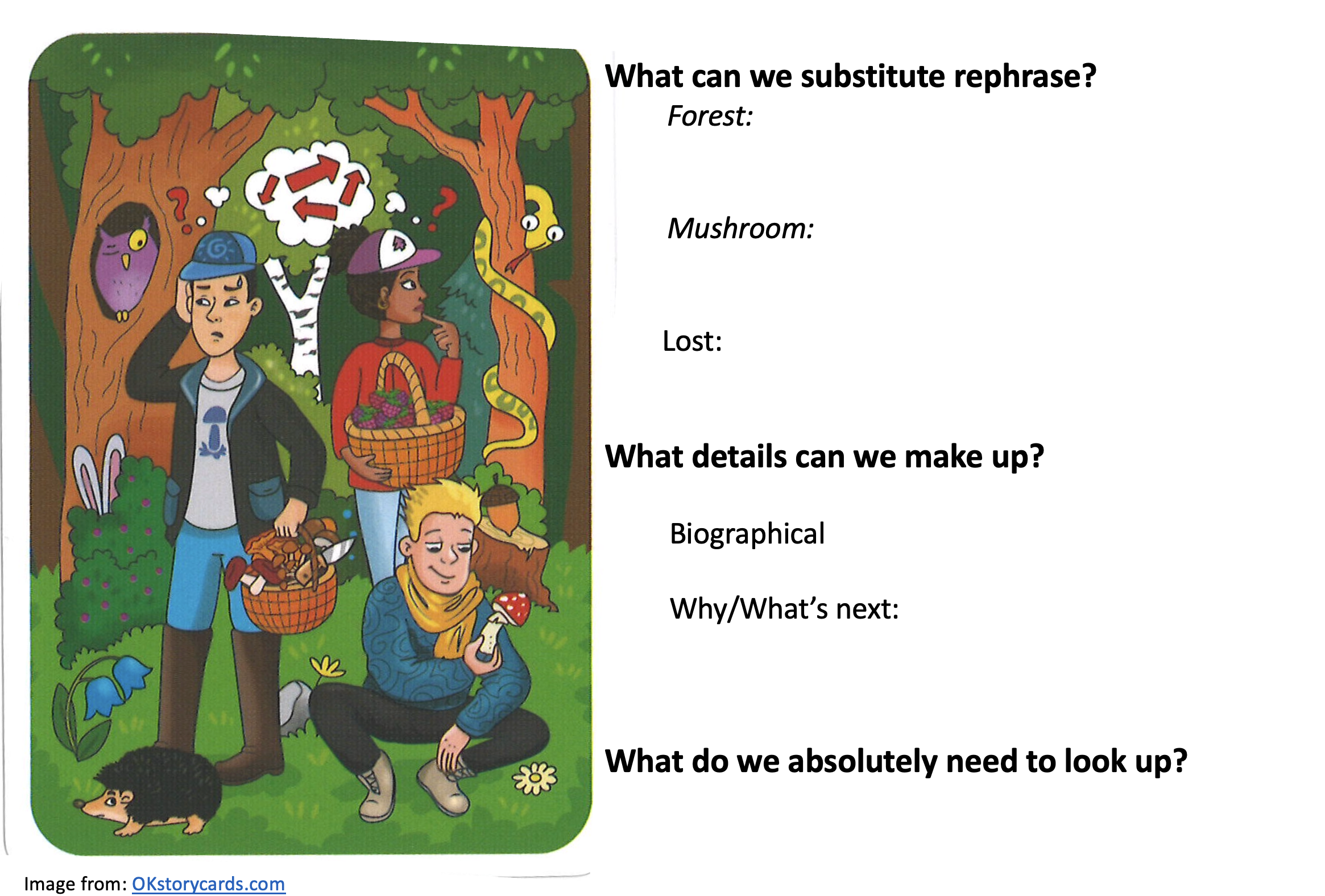
At this point, we can usually recognize that there are very few words we absolutely need to look up in order to communicate ideas. From there, we talk about the next steps if we are going to write a story. Students can begin by giving biographical information about the characters, such as their names, ages, and whether they are friends or family members. Then we move into what the characters are doing and why they are doing it.
For example, students might decide that the characters are looking for fruit because they want to make a cake. Now that they are lost, they need to find their way back to someone’s house. Even with limited vocabulary, students are able to build a simple but meaningful story.
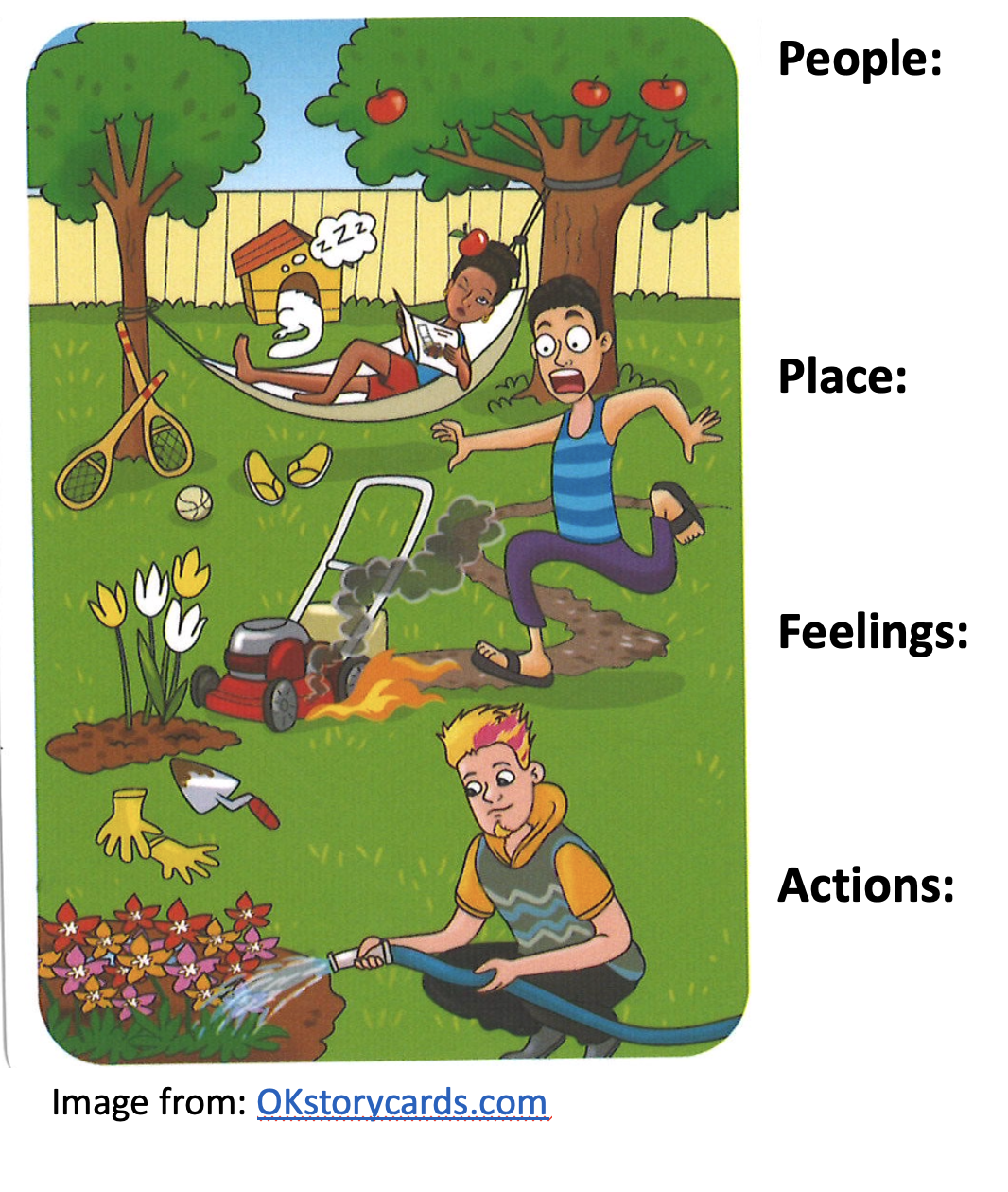
The next day, I use a different picture to guide students into writing a paragraph together as a class. We begin by listing the people, place, feelings, and actions we notice in the image. Again, we rely on circumlocution and rephrasing when students do not know a specific word. For example, students may not know how to say “backyard,” so they might substitute “park” or describe it as “the place behind the house.” If they do not know the word for grass, using “plantas” may be an acceptable replacement. Instead of saying “the lawn mower is on fire,” students might say “the thing that cuts is very hot.”
The goal is not perfect language. The goal is communication. It is important for students to understand that their writing in Spanish will look very different from their writing in their native language, and it should not simply be a direct translation.
After brainstorming together, we move into a co-writing activity where the students and I create the paragraph as a class. I write the text on the board while students copy it down. Throughout the process, I support students in developing sentences and help them express the ideas they want to communicate using the vocabulary they already know.
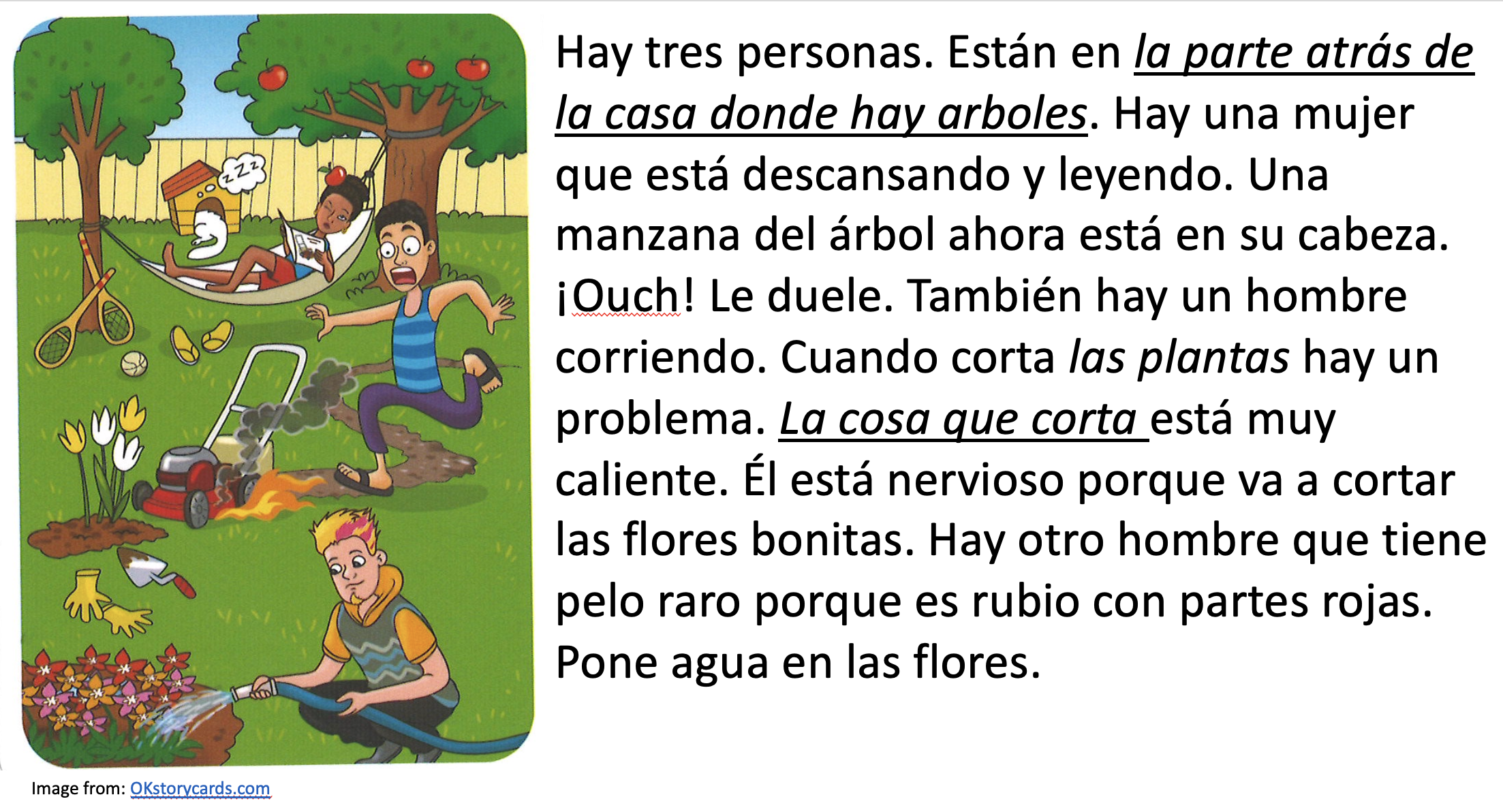
If you notice, we didn’t say the apple fell from the tree and hit her in the head. Student’s don’t have that language yet, so we use tricks like saying the apple is NOW on her head and using phrases like “ouch” to infer that it hit her. We didn’t use the word “regar las flores” because student’s don’t know that, so they came up with alternatives like using the verb “dar agua” or “poner agua”.
Want to try it this specific lesson? We have the powerpoint slides that you can try out on your own.
Note: These images came from OkStorycards and you can order a physical deck of 80 images that are super sturdy and thick that you can incorporate into your classes in speaking, writing, games, and more. They offer a ton of suggestions on different ways to incorporate these cards into your classes to get your students communicating.